ResMed AirCurve 11 VAuto Arrives, Completing the Air11 Bilevel Range
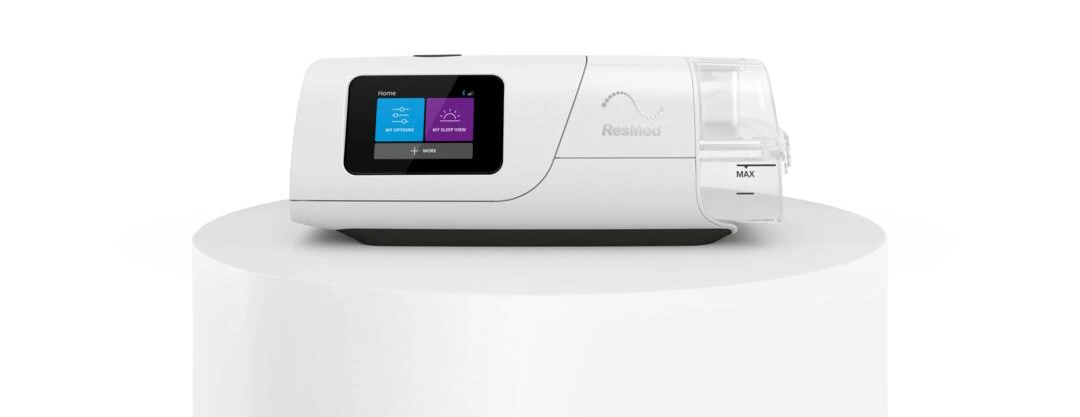
ResMed's Air11 bilevel range is now complete in Australia. The AirCurve 11 ASV arrived in late May 2026, and the AirCurve 11 VAuto has now joined it — replacing the AirCurve 10 VAuto and bringing the colour touchscreen, built-in mobile connectivity and over-the-air updates of the Air11 platform to auto-adjusting bilevel therapy.
If you are already on an AirCurve 10, or your specialist has just moved you onto bilevel, here is what has actually changed, what has deliberately stayed the same, and whether it is worth upgrading.
What's New in the Air11 Generation
The headline changes are all about the experience of living with the machine rather than the therapy it delivers.
- Colour touchscreen. Menus you tap through rather than scroll with a dial. Warmup, ramp, mask fit and humidity are all a couple of taps from the home screen.
- Built-in mobile connectivity. Therapy data uploads to myAir and AirView on its own, with no dongle and no wi-fi setup. Your clinician can review how you are going and adjust settings remotely.
- Over-the-air software updates. New features arrive on the device by themselves. This is genuinely new — an Air11 machine bought today will gain capabilities over its life rather than being frozen at the firmware it shipped with.
- Test Drive. Lets you try the airflow while you are awake and sitting up, before committing to a full night.
- Personal Therapy Assistant and Care Check-In. Voice-guided setup and periodic in-app check-ins through the first weeks, which is when most people who abandon therapy do so.
The Therapy Itself Is Unchanged — and That Matters
Underneath the new hardware, the algorithms are the ones ResMed has been refining for years. The AirCurve 11 VAuto runs the same AutoSet-based VAuto algorithm, with the same TiControl inspiratory time limits, the same Easy-Breathe waveform and the same VSync leak compensation. Pressure ranges are unchanged too.
That sounds unexciting, and it is the best news in the announcement. It means a prescription written for an AirCurve 10 transfers across without retitration, and it means the therapy you have already adapted to feels the same on the new machine. You are getting a better device to live with, not a different treatment to get used to.
VAuto or ASV? They Are Not Two Grades of the Same Thing
This trips people up constantly, so it is worth being blunt: the ASV is not a more powerful VAuto. The two treat different problems.
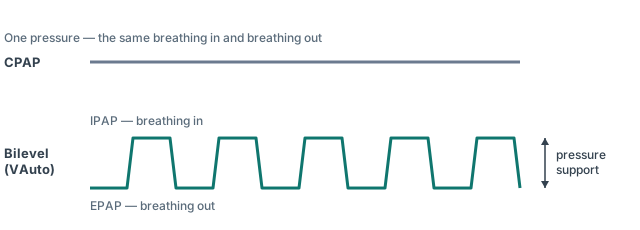
The VAuto is for obstructive sleep apnoea, where the airway narrows or closes and needs holding open. It delivers a higher pressure as you breathe in and a lower one as you breathe out, which makes exhaling far easier than on CPAP at the same therapeutic pressure.
The ASV is for central and complex sleep apnoea, where the airway is clear but the signal to breathe falters. It tracks your own breathing volume and adjusts support continuously, delivering a breath itself if you pause too long. It also carries a heart failure contraindication that the VAuto does not.
Your sleep specialist decides which applies. If you are weighing up device categories generally, our guide on how to choose the right CPAP machine covers where CPAP, bilevel and ASV each fit.
The Air11 Range at a Glance
Most of what people compare across these four machines is identical. The touchscreen, built-in cellular, over-the-air updates, Test Drive, Personal Therapy Assistant, Care Check-In, Easy-Breathe with EPR, SmartStart/Stop, myAir and AirView, the 380 mL humidifier and Climate Control are on every one of them. What actually separates them is the therapy.
| AirSense 11 Elite | AirSense 11 AutoSet | AirCurve 11 VAuto | AirCurve 11 ASV | |
|---|---|---|---|---|
| Device type | Fixed pressure (CPAP) | Auto-adjusting (APAP) | Bilevel | Adaptive servo-ventilation |
| Treats | Obstructive sleep apnoea | Obstructive sleep apnoea | Obstructive sleep apnoea | Central, obstructive and mixed apnoeas, periodic breathing |
| Therapy modes | CPAP | CPAP, AutoSet, AutoSet for Her | CPAP, VAuto, S | CPAP, ASV, ASVAuto |
| Pressure range (cm H₂O) | 4–20 | 4–20 | 4–20 CPAP, 2–25 S, 4–25 VAuto | 4–20 CPAP, 4–25 ASV |
| Ramp | AutoRamp with sleep onset detection | AutoRamp with sleep onset detection | Manually selectable, 5–45 min | Manually selectable, 5–45 min |
| Event detection | CSA, CSR, RERA | CSA, CSR, RERA | CSA | — |
| VSync leak management | — | — | Yes | Yes |
| TiControl, triggering and rise time | — | — | Yes | — |
| Backup rate | — | — | Manual | Automatic |
The short version: if you have obstructive sleep apnoea, you are choosing between the three on the left, and your prescribed pressure decides which. The ASV is a different category of device for a different diagnosis.
Should You Upgrade from an AirCurve 10?
An honest answer: if your AirCurve 10 is working and you are compliant on it, there is no clinical reason to replace it. The therapy is the same. Nothing about the AirCurve 11 will treat your sleep apnoea better.
The case for upgrading is practical rather than clinical, and it comes down to three situations:
- Your machine is nearing end of life. ResMed rates the device and power supply at five years. If you are at or past that, the AirCurve 11 is simply what you now buy.
- Data is a hassle. If you are pulling SD cards or fighting with a dongle to get data to your clinician, built-in cellular removes that entirely.
- You are struggling with therapy. The acclimatisation tools — Test Drive, Personal Therapy Assistant, Care Check-In — are aimed squarely at people in the first weeks. If you have been on and off bilevel for months, these are worth something.
If none of those apply, keep the machine you have and revisit when it ages out.
What Will Not Carry Across
One practical warning that catches people out. The AirCurve 11 uses the ClimateLineAir 11 heated tube and the HumidAir 11 water tub. Hoses and tubs from an AirSense 10 or AirCurve 10 will not fit — the connections changed with the platform.
So if you are upgrading and you have spare Air10 consumables in the cupboard, budget for replacing them. Your masks are fine: the AirCurve 11 works with any vented CPAP mask, and the 22 mm outlet connector is unchanged.
Availability in Australia
With the VAuto now landing, both Air11 bilevel machines are listed in our BiPAP and bilevel range, where you will find current pricing and stock — the AirCurve 11 ASV, available since late May, and the newly arrived AirCurve 11 VAuto.
Both are prescription-only devices. Upload your prescription with your order and we will configure the machine to your prescribed settings before it ships, so it works from the first night rather than arriving as a box of unconfigured hardware.
Frequently Asked Questions
Do I need a new prescription to move from an AirCurve 10 to an 11?
No. The therapy modes and pressure ranges are the same, so an existing bilevel prescription transfers directly. Send it through with your order and we will apply the settings before dispatch.
Can I keep using my AirCurve 10 tubing and humidifier tub?
No. The AirCurve 11 requires the ClimateLineAir 11 heated tube and HumidAir 11 tub. Your existing masks will still work.
Is the AirCurve 11 quieter than the 10?
The AirCurve 11 is rated at 27 dBA with the humidifier tub fitted — roughly the level of a whisper. In practice, mask and hose noise usually matter more to a partner than the machine itself.
What is the difference between the VAuto and the ASV?
The VAuto treats obstructive sleep apnoea with two pressures. The ASV treats central and complex sleep apnoea by adjusting support to your own breathing volume and delivering breaths when you pause. They are prescribed for different diagnoses, and the ASV carries a heart failure contraindication.
Can my clinician change my settings without me coming in?
Yes. With built-in cellular connectivity, therapy data reaches AirView automatically and prescribed setting changes can be pushed to the device remotely.
Where to From Here
If bilevel therapy has been recommended to you, the AirCurve 11 range is now what you will be offered in Australia. Browse the full BiPAP and bilevel range, or if you are earlier in the process and still working out which type of machine you need, start with our guide to choosing the right CPAP machine.