Oxygen Concentrators Australia — Portable and Home Oxygen
An oxygen concentrator takes ordinary room air, strips out the nitrogen and delivers concentrated oxygen on demand. Unlike a cylinder it never needs refilling or replacing — plug it in or charge the battery and it makes its own supply, indefinitely.
If you have been prescribed supplemental oxygen, the right concentrator is the one that matches your prescription, not the one with the biggest number. The sections below the range explain how to read the difference. If you already know you want a Kingon, the four models are compared on our Kingon range page.
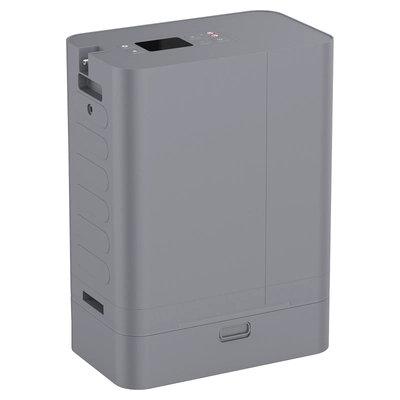
Which Kingon Model Suits You?
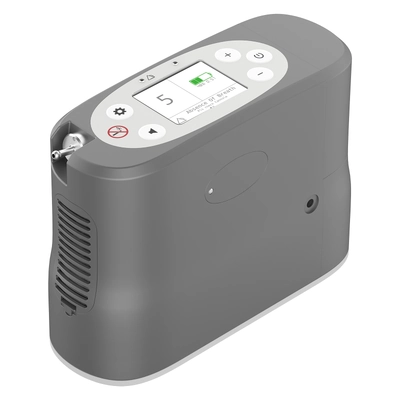
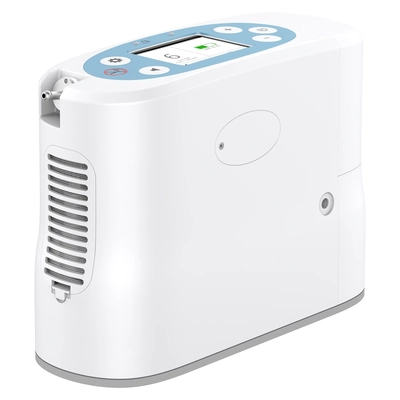
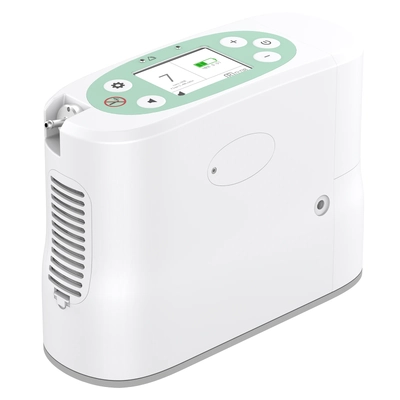
Every model in the range holds 90% oxygen concentration (−3% / +6%) at every setting, and every model carries the same three-year warranty, extended to five years if you register within 14 days. What separates them is output, runtime and portability.
| Model | Delivery | Maximum output | Weight | Battery runtime |
|---|---|---|---|---|
| Kingon P2-E | Pulse dose | 1,000 ml/min — five settings | 1.98kg | 5 hours to 1 hour 42 minutes |
| Kingon P2-E6 | Pulse dose | 1,200 ml/min — six settings | 1.98kg | 5 hours 24 minutes to 1 hour 42 minutes |
| Kingon P2-E7 | Pulse dose | 1,400 ml/min — seven settings | 1.98kg | 7 hours to 1 hour 42 minutes |
| Kingon P2-TOC | Continuous flow and pulse dose | 3 LPM continuous / 2,000 ml/min pulse | 8kg, travels on its cart | 6 hours 36 minutes to 1 hour 12 minutes |
Runtimes are per battery, at the lowest and highest settings respectively. The three P2-E models ship with two batteries, so the practical figures roughly double. Read the table from the left: your prescription decides the delivery mode, your prescribed setting decides the output you need, and only then does runtime become the tie-breaker. The P2-E7 is worth a look even on a lower setting, because its extra capacity is spent on duration rather than output — 7 hours on a single battery at setting 1, against 5 hours for the P2-E.
Pulse Dose or Continuous Flow?
This is the distinction that decides everything else, and it is worth understanding before you compare models on anything.
- Pulse dose devices release a measured burst of oxygen each time they sense you breathe in, and nothing in between. Because they are not producing oxygen continuously, they can be dramatically smaller, lighter and longer-lasting on a battery. The entire P2-E range works this way.
- Continuous flow devices deliver oxygen at a constant rate whether you are breathing in or out, like a tap left running. They are heavier and draw more power, but they are what is prescribed where a steady, measured LPM rate is clinically necessary — including, in most cases, for use during sleep. The P2-TOC is our continuous flow option, and it does pulse dose as well.
Your prescription determines which you need. If you have been prescribed continuous flow, a pulse dose device is not a substitute for it, however convenient it looks.
Portable or Transportable?
The two words get used interchangeably in advertising, and they should not be. A portable concentrator is one you carry — the 1.98kg P2-E models go over a shoulder and stay there. A transportable concentrator is one you move. At 8kg the P2-TOC travels on its included cart, comes with you in the car and sits beside the bed overnight, but it is not something you wear around a shopping centre.
The trade you are making is weight for capability. The P2-TOC is rated for continuous duty 24 hours a day on mains power, which means one machine can cover both the overnight therapy and the day out — the job that otherwise takes two separate devices, two purchases and two sets of consumables.
Using Oxygen Alongside CPAP
Worth stating plainly, because a good number of people arrive here expecting otherwise. Oxygen concentrators do not treat sleep apnea. The two devices solve different problems: a CPAP machine uses air pressure to hold your airway open while you sleep, while an oxygen concentrator raises the oxygen content of the air you breathe. Neither substitutes for the other, and adding oxygen will not keep an airway open.
If you have been told to use supplemental oxygen alongside your CPAP therapy, that is a third arrangement again, and an important one to get right. Pulse dose concentrators cannot supply a CPAP circuit. They deliver only when a sensor detects you drawing breath, and inside a pressurised circuit there is no breath for them to detect. Bleeding oxygen into CPAP requires a continuous flow source, joined to the circuit through an oxygen port or enrichment adapter. In our range, that means the P2-TOC. Ring us before you order if this is your situation — the connection method matters as much as the machine.
What to Look For
Once your prescription has settled the pulse-versus-continuous question, four things separate one concentrator from another.
- Maximum output — measured in ml/min per pulse, and often quoted as an approximate LPM equivalent. It needs to cover your prescribed setting with a little room to spare. If you have been told your requirement may rise over time, buying that headroom now is cheaper than buying a second machine later.
- Battery life at your setting — not the headline figure. Runtime falls steeply as the setting rises, so check the duration at the setting you will actually use. Every product page lists all of them.
- Weight — the difference between a device you take with you and one that stays by the chair.
- Air travel — the P2-E models are FAA approved and accepted by Australian carriers, but Qantas and Virgin each require their own paperwork, submitted before you fly rather than at the gate. Airlines also expect enough battery to cover 150% of your flight time.
Frequently Asked Questions
Do I need a prescription to buy an oxygen concentrator in Australia?
Yes. Supplemental oxygen is a prescribed therapy, and both the device and your flow setting should be determined by a qualified medical practitioner. We are happy to talk through the options before you have one, but please do not self-prescribe a setting — too much oxygen carries its own risks, and pulse settings are not litres per minute.
How much does an oxygen concentrator cost in Australia?
Portable pulse dose concentrators generally run from around $2,500 to $6,000 depending on output and battery life, with continuous flow units priced according to their maximum LPM. It is a significant purchase, which is why it is worth a phone call to make sure the model matches the prescription before you commit. If you are purchasing through NDIS or DVA, tell us and we will handle the invoicing.
Can I use an oxygen concentrator while I sleep?
Only if your prescriber has specifically advised it, and generally not with a pulse dose device. Breathing becomes shallow and irregular during sleep, which makes breath detection unreliable — continuous flow is what is normally prescribed for overnight use, which in this range means the P2-TOC.
Can I take a portable oxygen concentrator on a plane?
The P2-E models are FAA approved and accepted for domestic and international flights. Both Qantas and Virgin require advance approval rather than a decision at the gate, so allow time for the paperwork, and pack enough charged batteries to cover 150% of your flying time in your cabin baggage. The P2-TOC is not intended as a cabin device.
How long do the batteries last?
It depends entirely on your flow setting. Across the P2-E range a single battery runs between roughly 7 hours at the lowest setting and 1 hour 42 minutes at the highest, and two batteries are included with every unit. Recharging takes around four hours. Each product page lists the full duration for every setting.
Can I run one from the car?
Yes, all models accept DC power. Note that on car power the P2-TOC is limited to pulse settings 1–8, or 1 to 2.0 LPM in continuous mode; on mains power there is no such limit. If your prescribed setting sits above those figures, plan longer trips around AC power rather than assuming the car will carry you.
Talk to Us First
Oxygen equipment is not a purchase to guess at. Call 1300 992 727 or send us a message and we will check the model against your prescription before you order — it is a short conversation and it saves getting it wrong. You can also browse the full Kingon range, stock up on cannulas, filters and spare batteries, or see our pulse oximeters if you have been asked to monitor your saturation at home.
Before your machine arrives: have a read of using oxygen safely at home. Oxygen makes everything around it burn faster, and there are a few things worth sorting out in advance — including registering as a life support customer with your electricity retailer. A printed copy comes in the box with every concentrator.
Already own a Kingon and need to look up an alert on the display? Our Kingon P2 alert codes guide lists all 23.