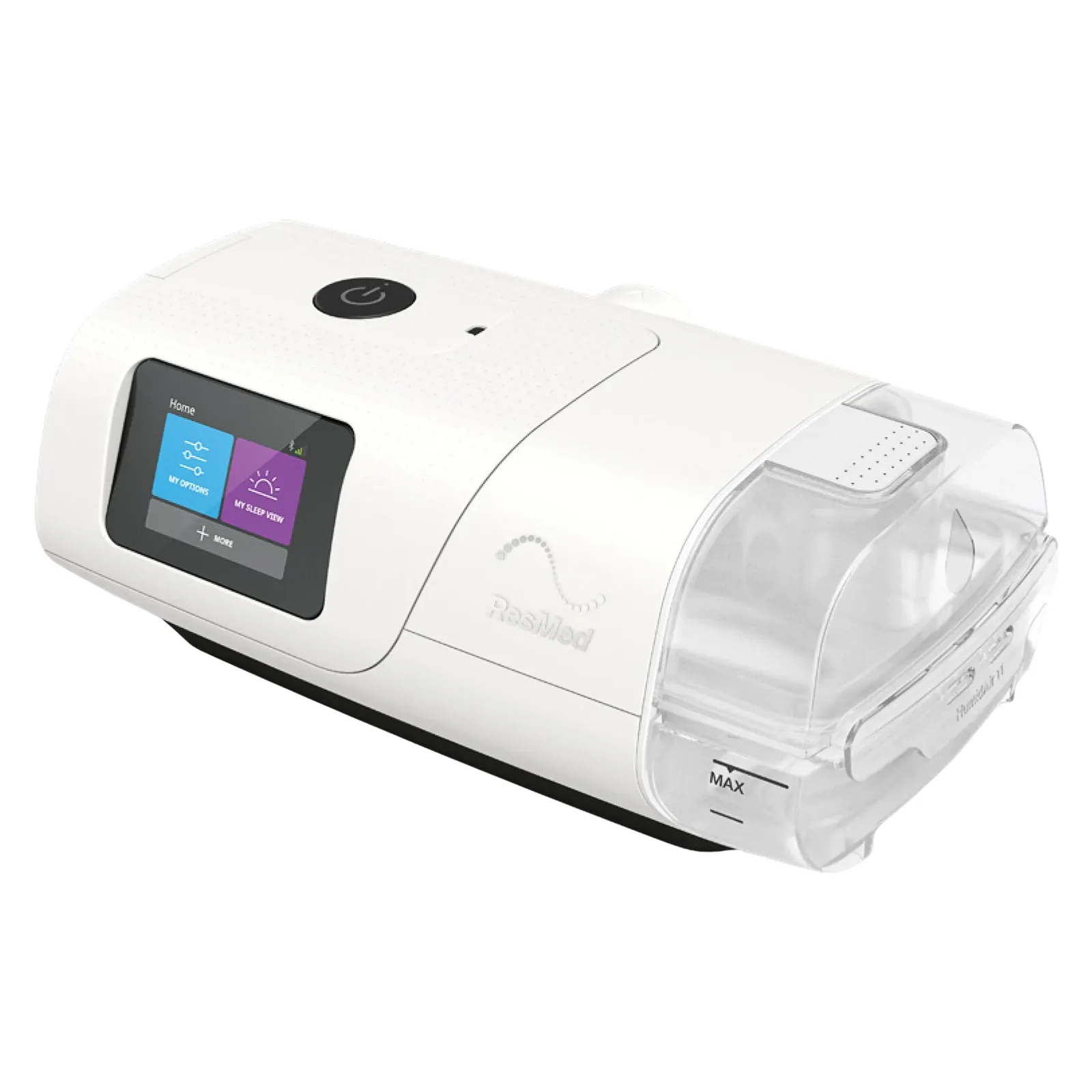
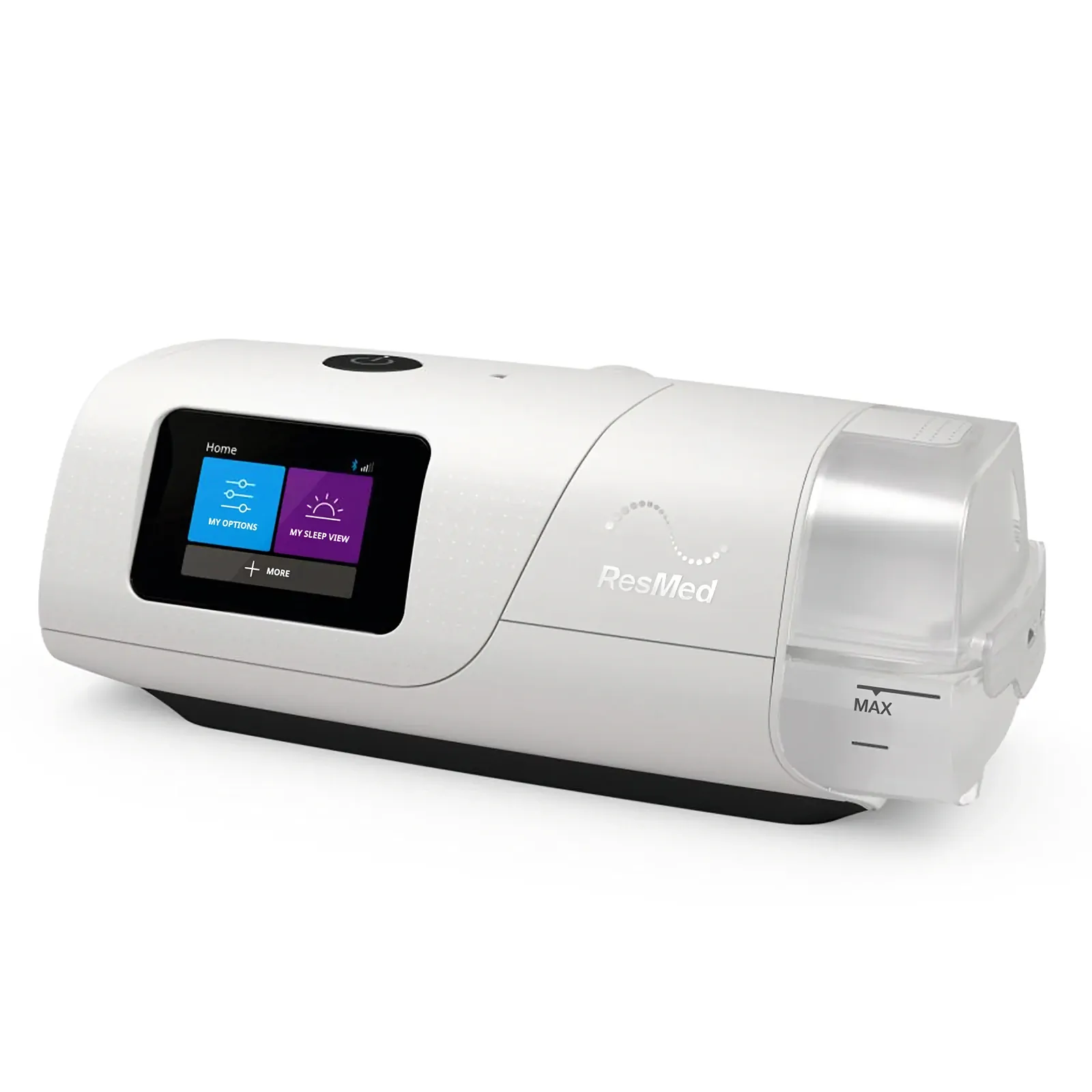
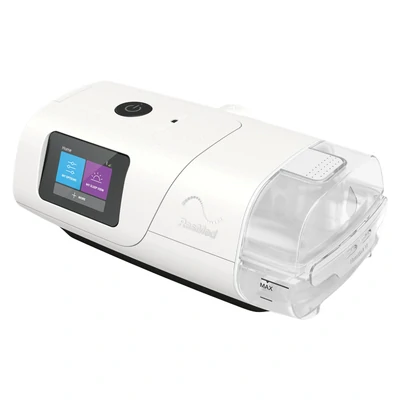
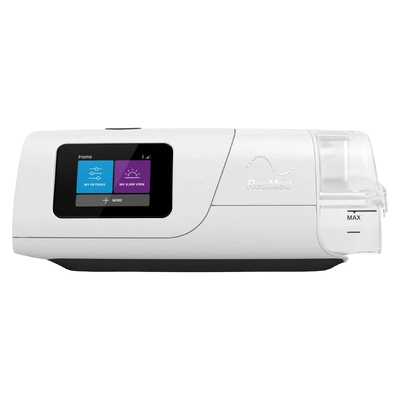
ResMed AirCurve 11 ASV Adaptive Servo-Ventilation Bilevel Machine
Prescription required.
SKU: RES39109 | MPN: 39109
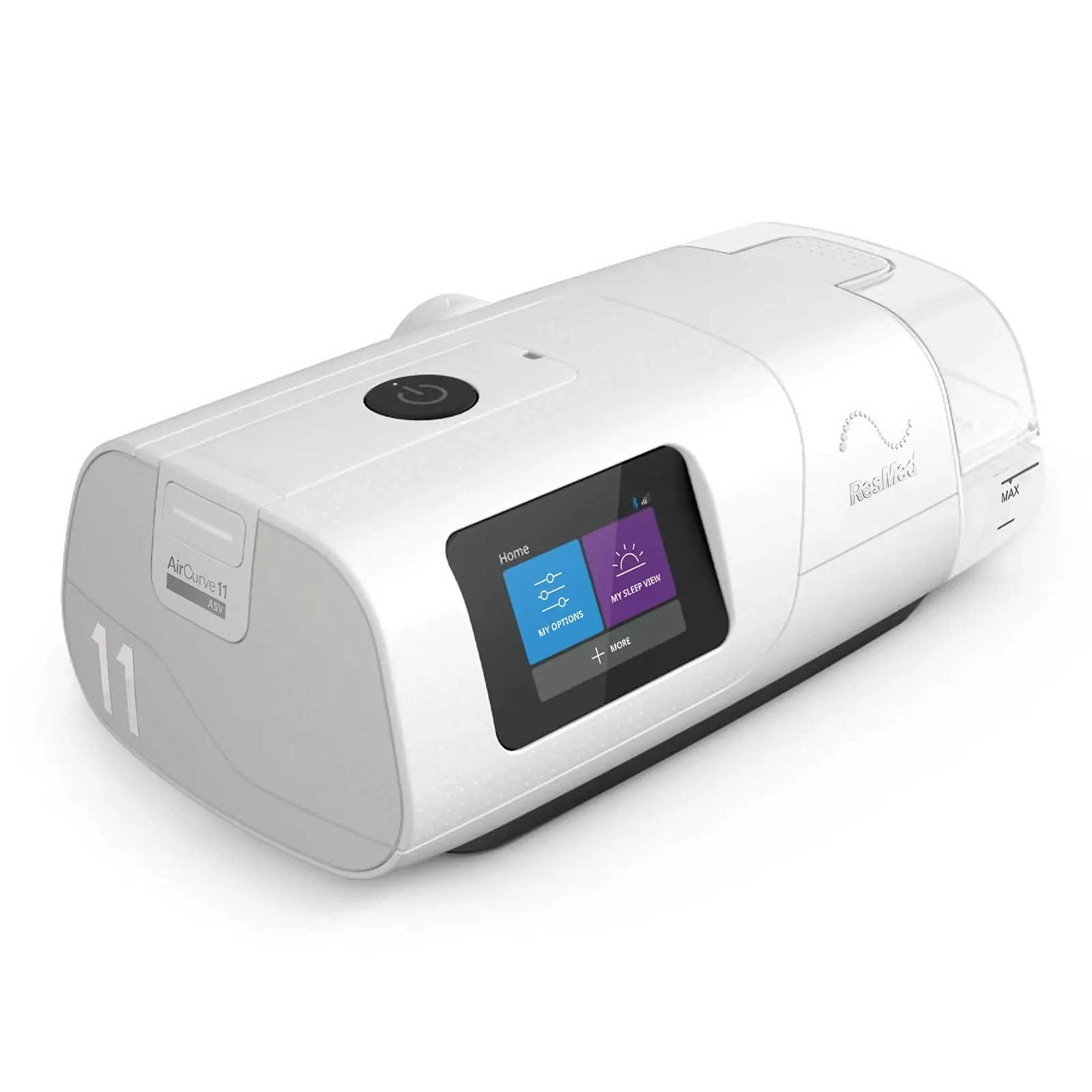
- Adaptive servo-ventilation for central sleep apnea
- ASV, ASVAuto and CPAP therapy modes
- PaceWave algorithm with auto backup rate
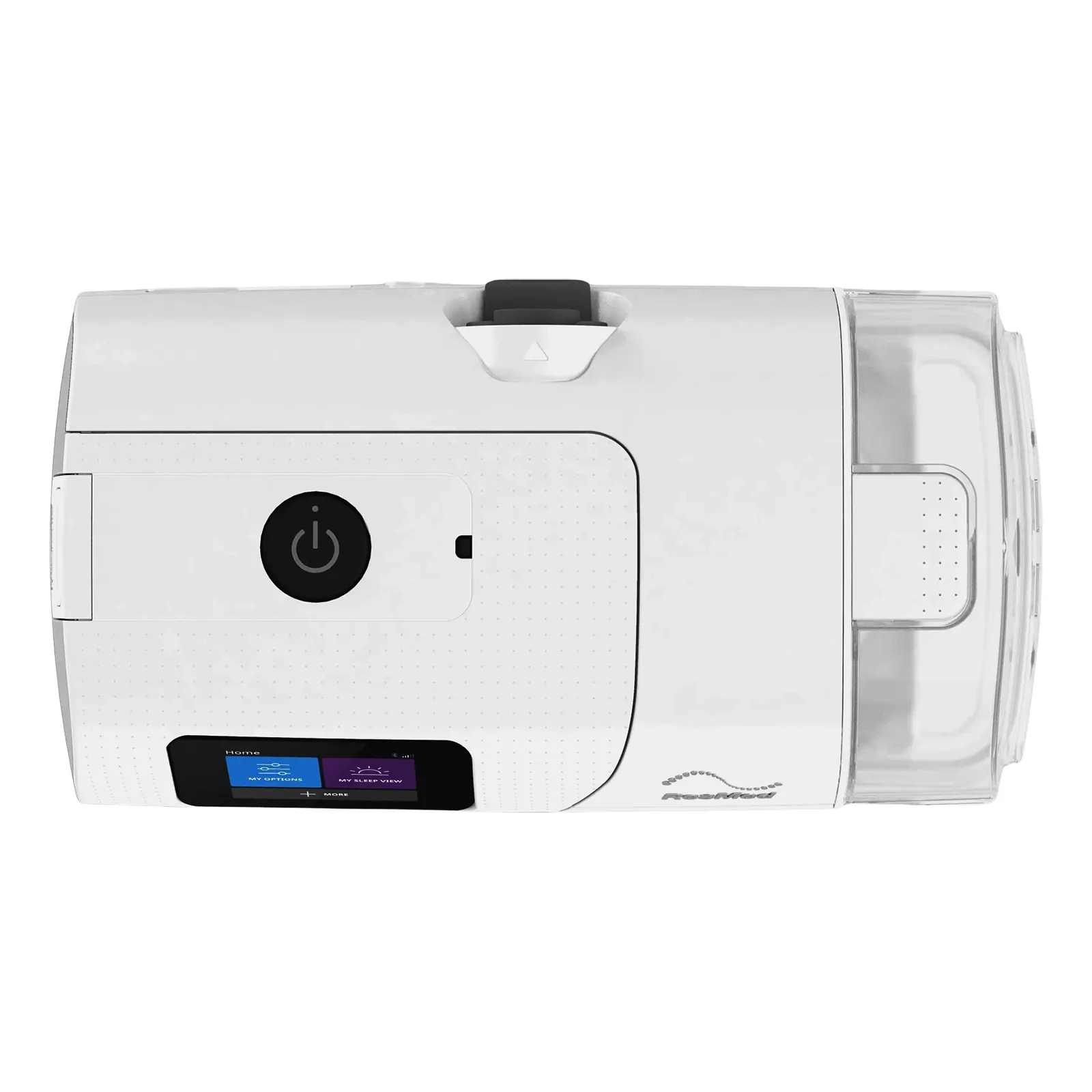
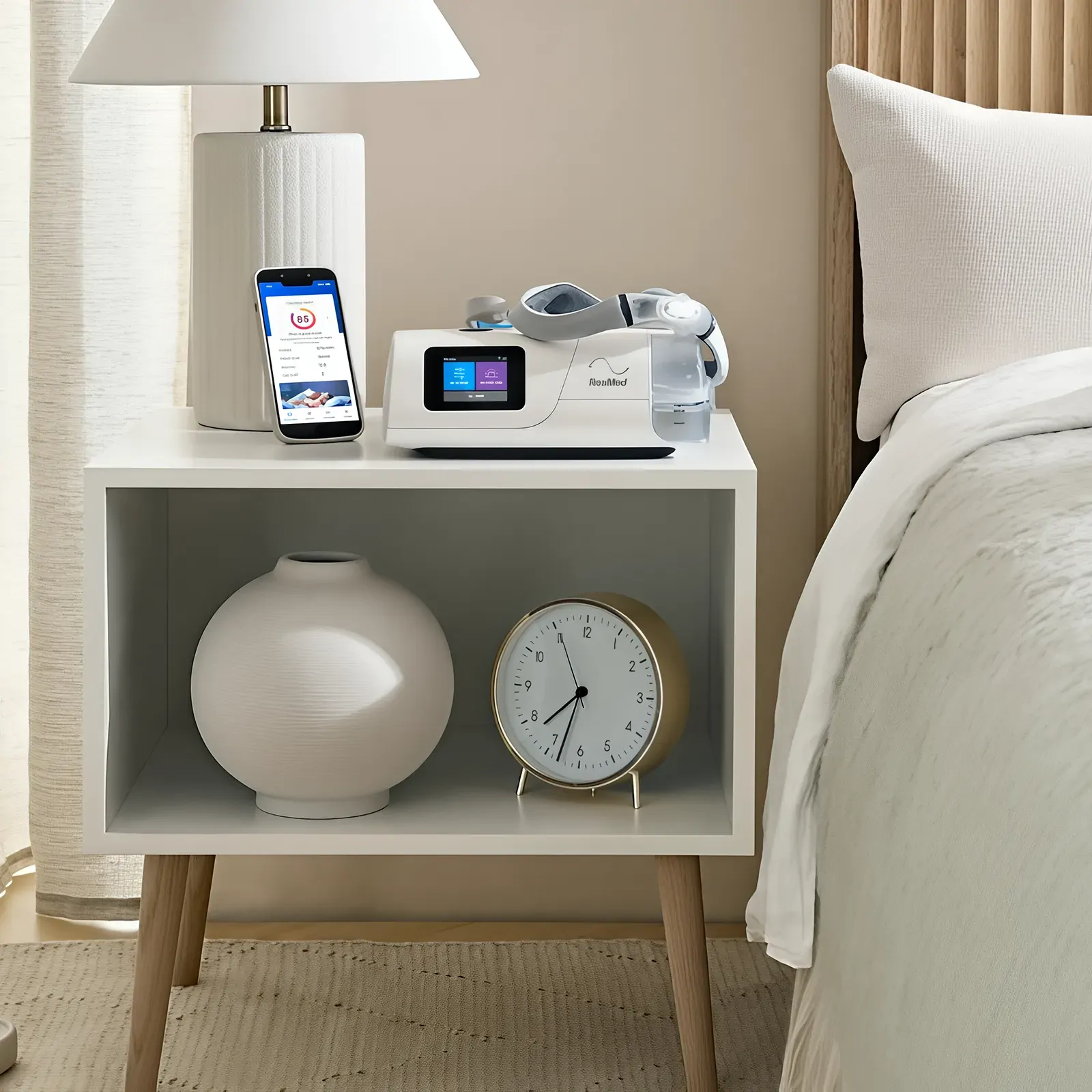
- Built-in HumidAir 11 heated humidifier
- Cellular + Bluetooth myAir connectivity
- TGA approved, Australian made

Delivery location required for AU, please enter a valid postcode.
ResMed AirCurve 11 ASV adaptive servo-ventilation bilevel machine for central, mixed and complex sleep apnea. PaceWave algorithm, AutoEPAP, Bluetooth and cellular myAir support, built-in HumidAir 11 humidifier. Australian-made. Prescription required.
The ResMed AirCurve 11 ASV is an adaptive servo-ventilation device for central, mixed and complex sleep apnoea. It is not a more powerful CPAP machine — it treats a fundamentally different problem, and it is prescribed when air pressure alone cannot solve what is going wrong.
Why CPAP Cannot Fix Central Apnoea
Obstructive sleep apnoea is a plumbing problem. The airway narrows or collapses while you sleep, and CPAP splints it open with steady air pressure. Because the fault is mechanical, a mechanical fix works.
Central sleep apnoea is a signalling problem. The airway is clear and nothing is blocking it, but the instruction from the brain to take a breath does not arrive. Blowing air at an open airway does not make someone breathe. In some people this produces a distinctive rising-and-falling pattern that fades to nothing before starting again — Cheyne-Stokes breathing, commonly associated with heart failure and stroke.
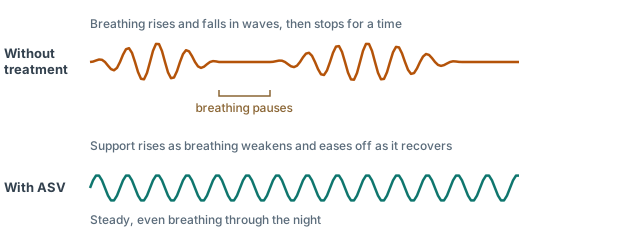
ASV measures your own recent breathing — your minute ventilation, the volume of air you move per minute — and treats that as a moving target. When your breathing weakens it increases support to make up the shortfall; when it recovers, it backs off. If you stop altogether, it delivers a breath itself.
What the Numbers on Your Prescription Mean
An ASV prescription has more moving parts than a CPAP or bilevel one, because two things are being controlled at once: keeping your airway open, and keeping your breathing volume steady.
- EPAP — the expiratory pressure that holds your airway open. Fixed in ASV mode; in ASVAuto you will see a Min and Max EPAP instead, and the machine moves between them.
- Min PS — the least pressure support the machine will apply when your breathing is steady and needs no help.
- Max PS — the most it will apply when your breathing drops away. ResMed recommends at least 15 cm H₂O so the machine has headroom to respond.
- Backup rate — usually no number, because the machine calculates it from your own recent breathing rate, falling back to 15 breaths per minute only if needed.
The practical consequence: ASV pressure is never still. Support changes continuously through the night — that is the therapy working, not a fault.
Key Features
- Targets your own minute ventilation — it works to your recent breathing volume rather than a preset number, so the target moves with you.
- Synchronised backup breaths — when a pause runs long it delivers a breath timed to your own rhythm, rather than cutting across one you were about to take.
- ASVAuto mode with auto-adjusting EPAP — applies only as much expiratory pressure as your airway actually needs, breath by breath.
- Treats obstructive events at the same time — important, because complex sleep apnoea is a mix of both and you should not need two machines.
- VSync leak management — compensates for mask and mouth leak, which matters more here than on any other therapy because the algorithm reads your airflow to decide how much support to give.
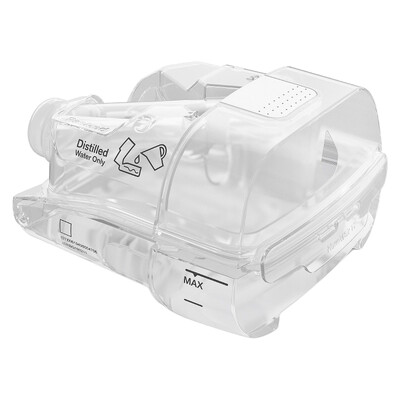
- HumidAir 11 heated humidification — a 380 mL tub built into the side of the device. Pair it with ClimateLineAir 11 heated tubing for Climate Control, which stops condensation pooling in the hose.
- Built-in cellular and Bluetooth — data syncs to myAir and AirView automatically, so your specialist can review and adjust settings remotely.
Who Is This For?
ASV is prescribed by a sleep specialist for people whose breathing is not resolved by CPAP or fixed bilevel therapy. In practice that means:
- Central sleep apnoea, including idiopathic CSA and Cheyne-Stokes respiration
- Treatment-emergent central apnoea — central events that appeared once CPAP therapy started
- Complex or mixed sleep apnoea, combining obstructive and central events
- Periodic breathing patterns
- Existing AirCurve 10 CS PaceWave users moving to the connected Air11 platform
If your diagnosis is obstructive sleep apnoea and you simply need more support than CPAP delivers, ASV is the wrong device — a bilevel machine is what you want. Our guide on how to choose the right CPAP machine covers where each therapy fits.
What to Expect in the First Few Nights
- The pressure will feel like it is moving constantly. It is. ASV changes support breath by breath by design, and it feels less settled than CPAP at first.
- Mask leak matters more here. A leak does not just waste pressure — it distorts what the machine thinks your breathing is doing. Run Mask Fit before you settle.
- Use the ramp. It starts at a gentler pressure with support at minimum, then hands over to the algorithm once you are asleep.
- Bloating or air swallowing. Reasonably common with higher pressure support. Usually settles; mention it if it does not.
When to Go Back to Your Doctor
Contact your sleep specialist if you feel breathless or lightheaded on waking, get chest discomfort or persistent headaches, are still exhausted after several weeks of consistent use, or your myAir data shows events staying high. Also go back if your heart health changes at all after starting ASV — the contraindication above depends on your cardiac status, and that can change after a device is prescribed.
What's in the Box
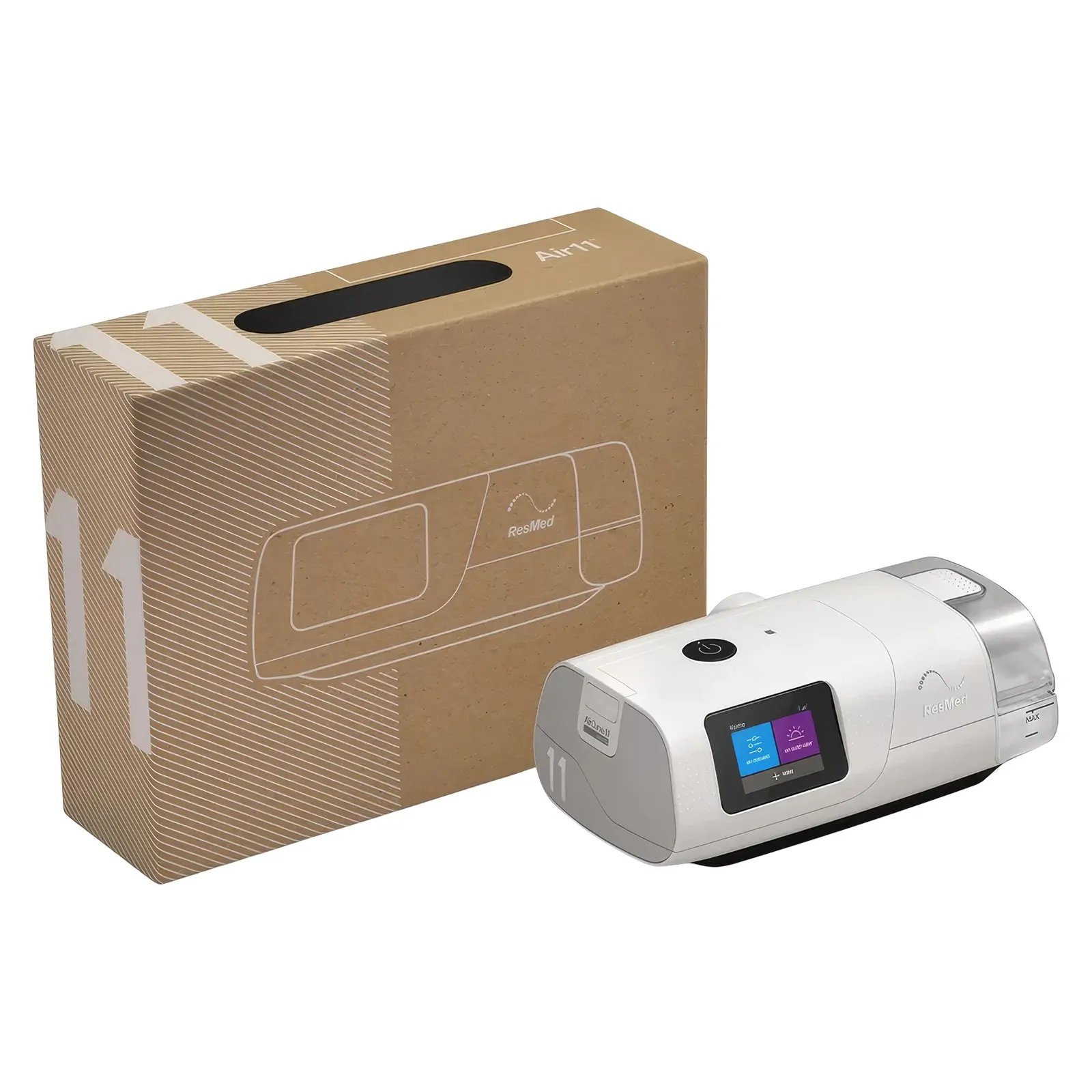
- AirCurve 11 ASV device
- HumidAir 11 humidifier tub
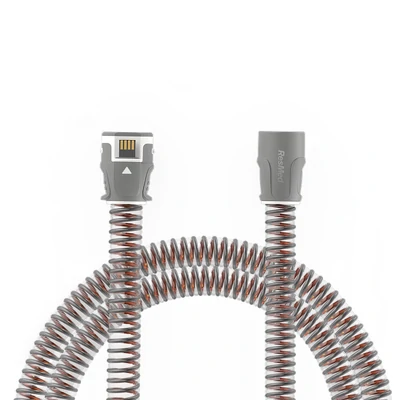
- Air tubing
- Air11 90 W power supply unit and power cord
- Air11 air filter
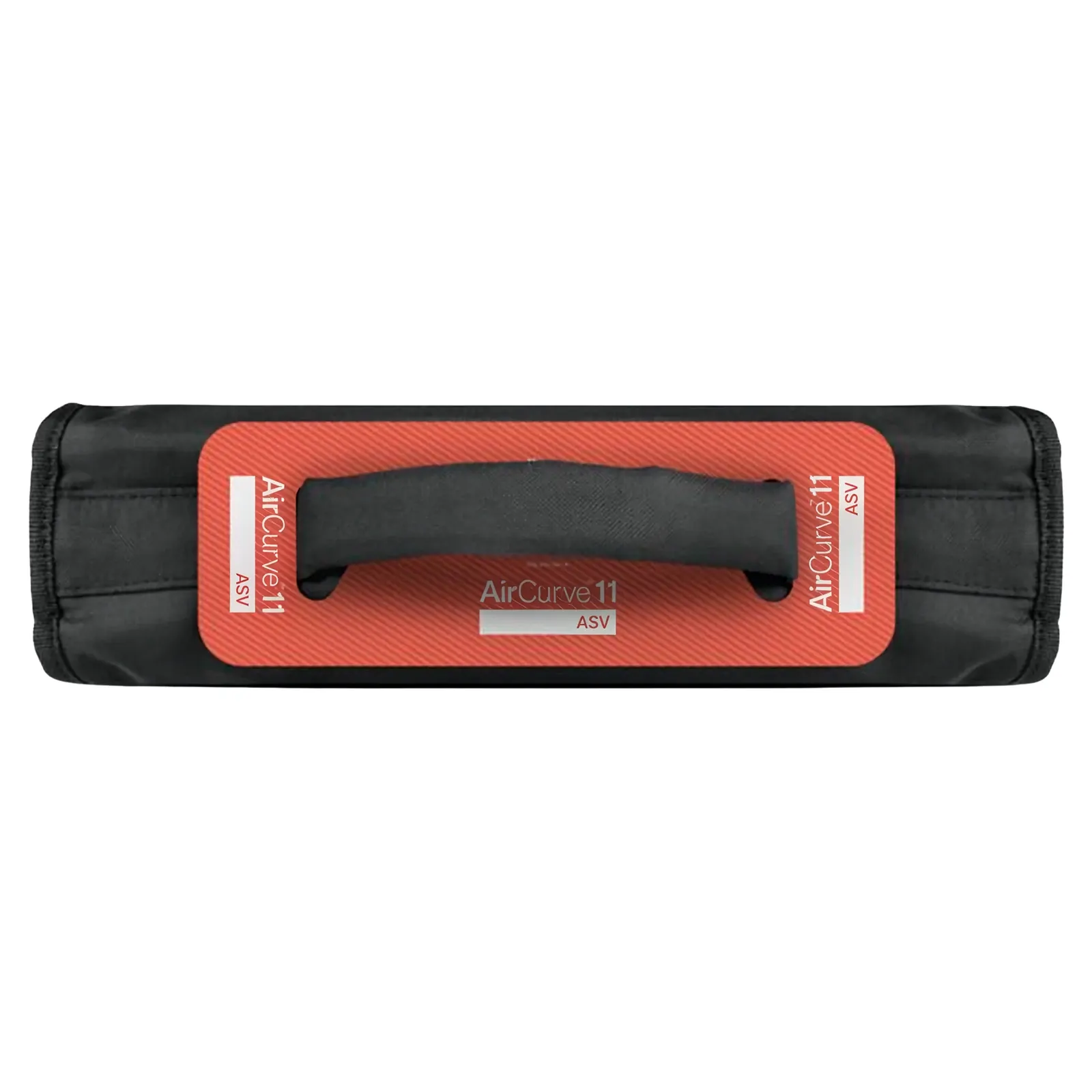
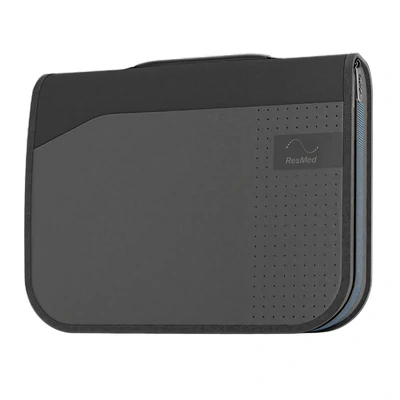
- Travel bag
A note if you are upgrading: the AirCurve 11 uses the ClimateLineAir 11 heated tube and HumidAir 11 tub. Hoses and tubs from an AirSense 10 or AirCurve 10 will not fit.
Because the algorithm depends on reading your breathing accurately, mask seal is not just a comfort question here — it affects how well the therapy works. The AirCurve 11 takes any vented CPAP mask; our full face CPAP masks are the most common pairing.
| Specification | Detail |
|---|---|
| ResMed product code | 39109 |
| ARTG ID | 236085 |
| GTIN | 619498391097 |
| Indication | OSA (in patients > 30 kg); ASV and ASVAuto modes also indicated for central and/or mixed apneas, or periodic breathing |
| Therapy modes | ASV, ASVAuto, CPAP |
| Maximum device pressure | 25 cm H₂O |
| EPAP range | 4–15 cm H₂O (0.2 cm H₂O increments) |
| Pressure Support (Min / Max) | Min PS: 0–6 cm H₂O; Max PS: 5–20 cm H₂O |
| CPAP pressure range | 4–20 cm H₂O |
| Ramp | Off / 5–45 minutes (5-minute increments) |
| Backup rate | Auto (synchronised via Breath Phase Mapping) |
| Leak management | VSync automatic leak compensation |
| Supplemental oxygen | Compatible with up to 15 L/min |
| Humidifier capacity | 380 mL (HumidAir 11 Cleanable tub) |
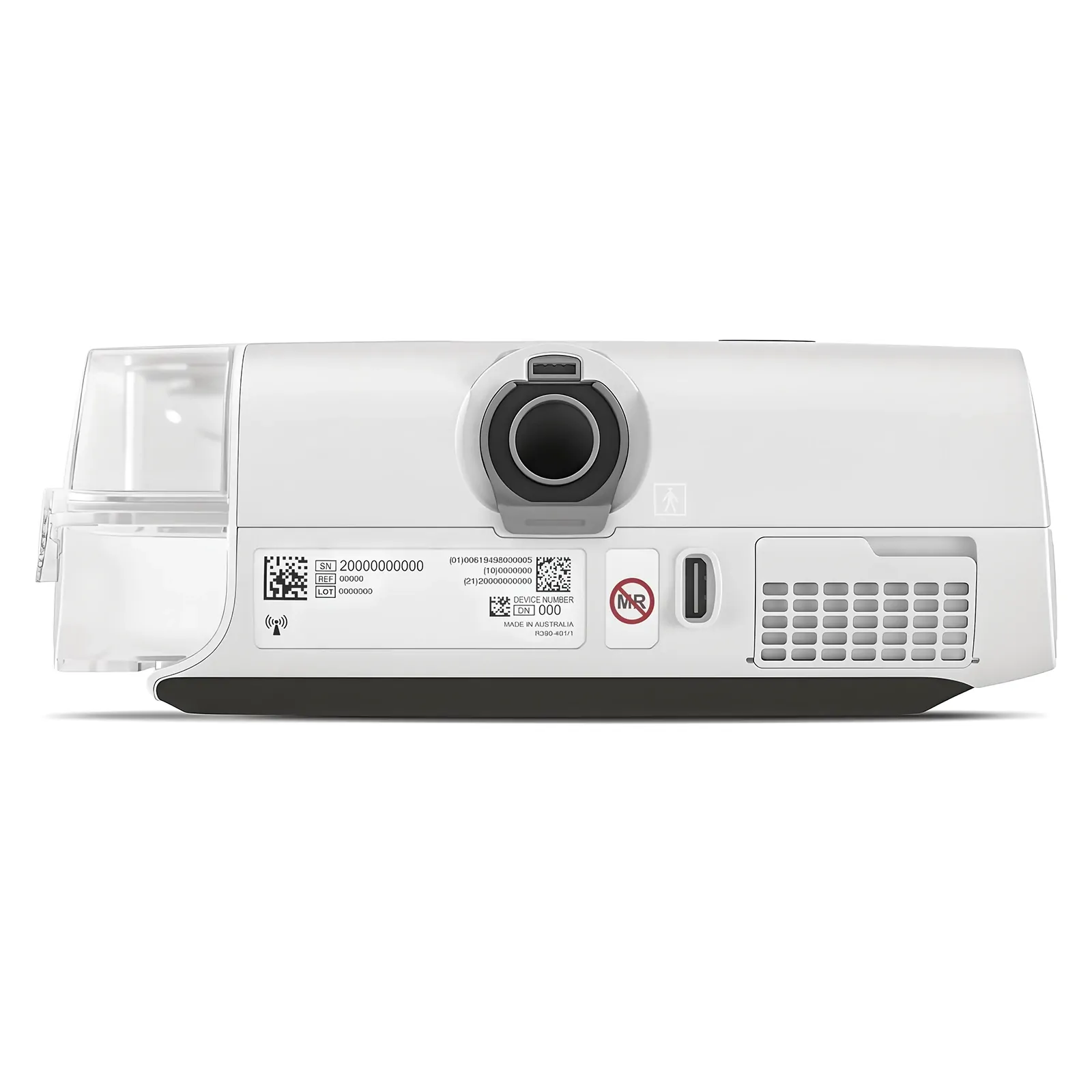
| Connectivity | Cellular + Bluetooth Low Energy |
| Sound (with standard tubing & humidifier) | 27 dBA sound pressure level |
| Dimensions (H × W × D, with humidifier) | 94.5 × 259.4 × 138.5 mm |
| Weight (with humidifier tub) | 1.229 kg |
| Power supply | Air11 90W AC adaptor (100–240 V, 50–60 Hz) |
| FAA approved for in-flight use | Yes (RTCA/DO-160) |
| Country of manufacture | Australia |
| Device warranty | 2 years. 5 years with Sleepvantage registgration. |
| SKU | RES39109 |
| Model # | 39109 |
| ARTG # | 236085 |
| UPC/EAN | 619498391097 |
| Brand | ResMed |
| Shipping Weight | 2.3000kg |
| Shipping Width | 0.371m |
| Shipping Height | 0.113m |
| Shipping Length | 0.287m |
| Shipping Cubic | 0.012031901m3 |
More From This Category
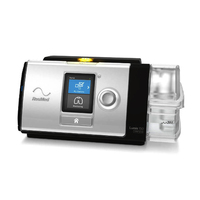
ResMed Lumis 150 VPAP ST-A 4G Wireless Connectivity, HumidAir & ClimateLineAir
SKU: RES28226
$3,999.00
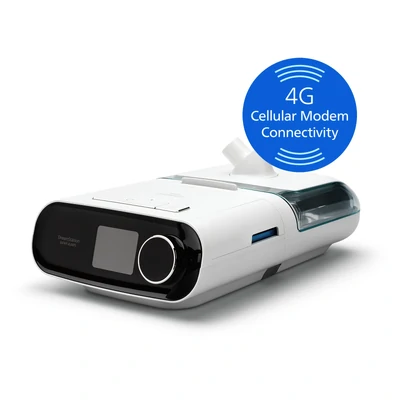
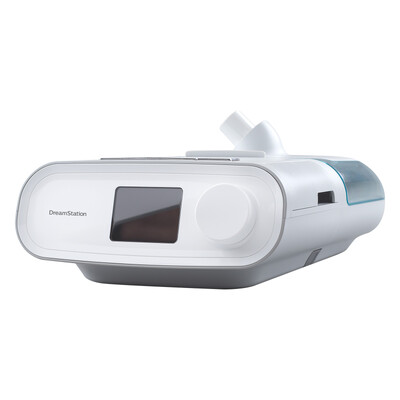
Philips DreamStation BiPAP AVAPS 4G Modem with Humidifier & Heated Tube
SKU: PHIAUX1131T15C
$3,299.00
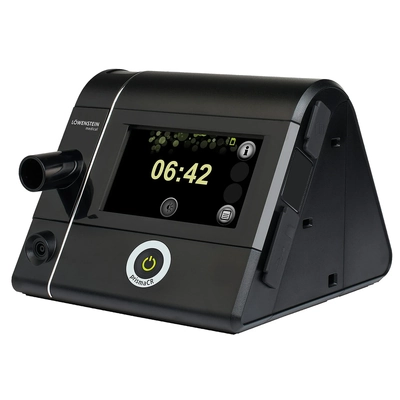
Lowenstein PrismaCR AcSV Therapy Set with Heated Tube, Humidifier & 4G Modem
SKU: LOW299602111
$3,999.00
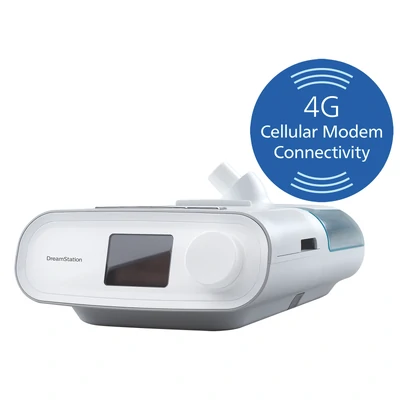
Philips DreamStation Auto BiPAP with Humidifier, Heated Tube & 4G Modem
SKU: PHIAUX700T15C
$2,099.00
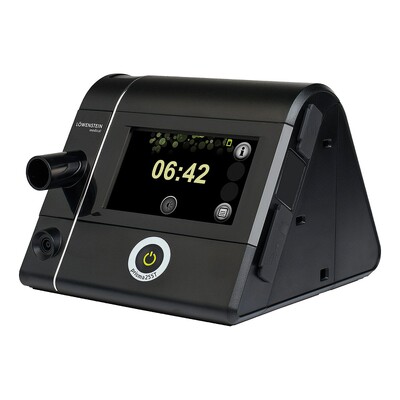
Lowenstein Prisma 25ST BiLevel (AUTO) S/T set with PrismaAQUA Humidifier, Heated Tube & Modem
SKU: LOWWM-29920-1111-KIT
$3,899.00
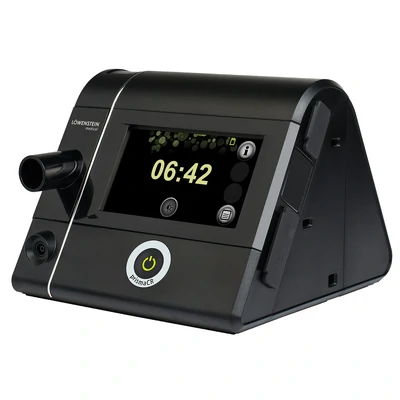
PrismaCR AcSV Therapy set with PrismaAQUA Humidifier & Heated Tube
SKU: LOW29960-2111-KIT2
$3,450.00