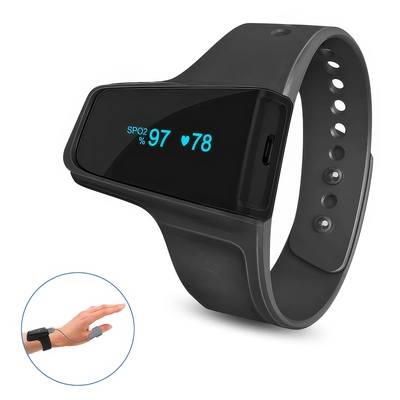
Wellue O2Ring–S — Wearable Overnight Pulse Oximeter
SKU: WELO2RING-S | MPN: O2Ring-S
- Records oxygen and pulse every second
- Silent vibration alert on low oxygen
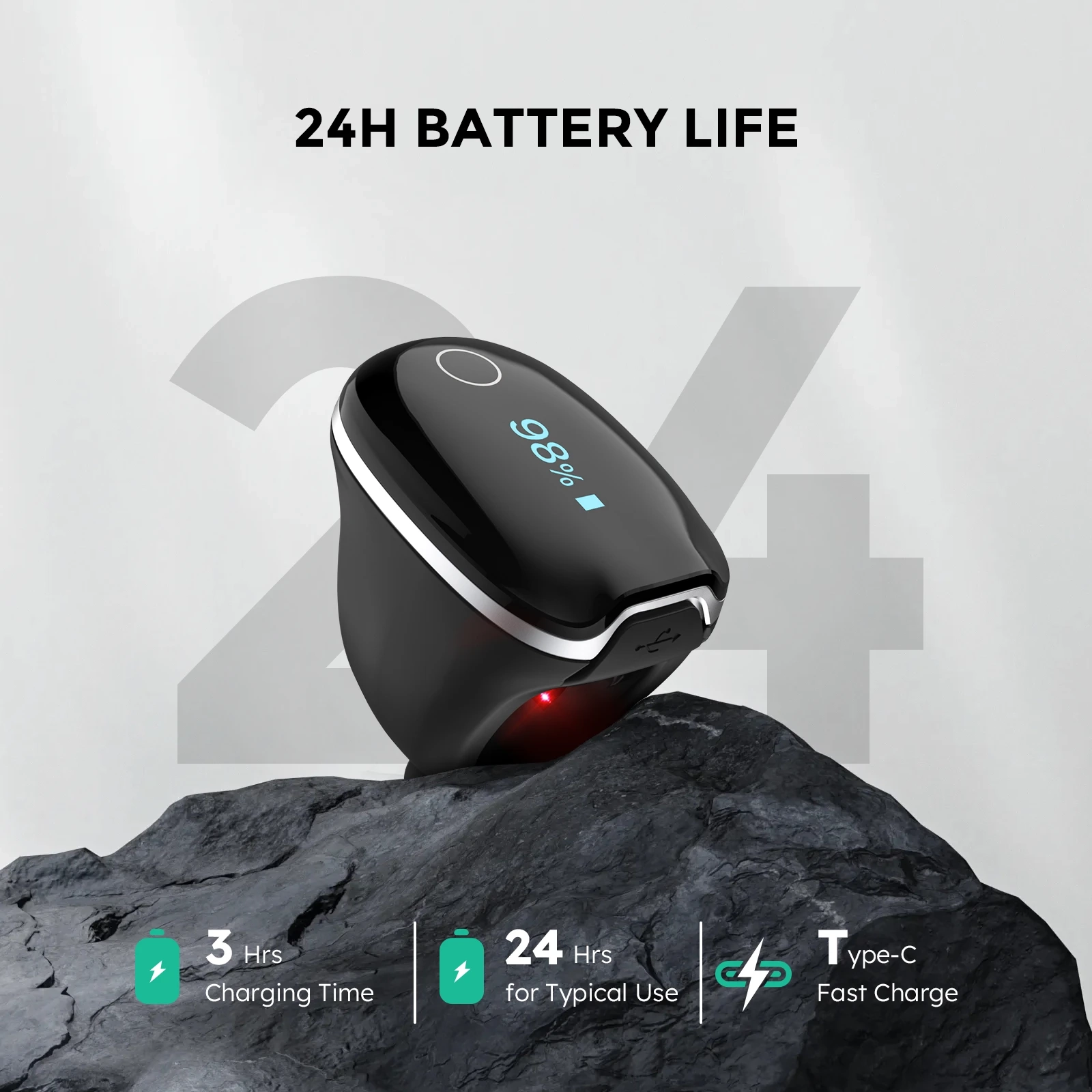
- Up to 24 hours per charge, USB-C
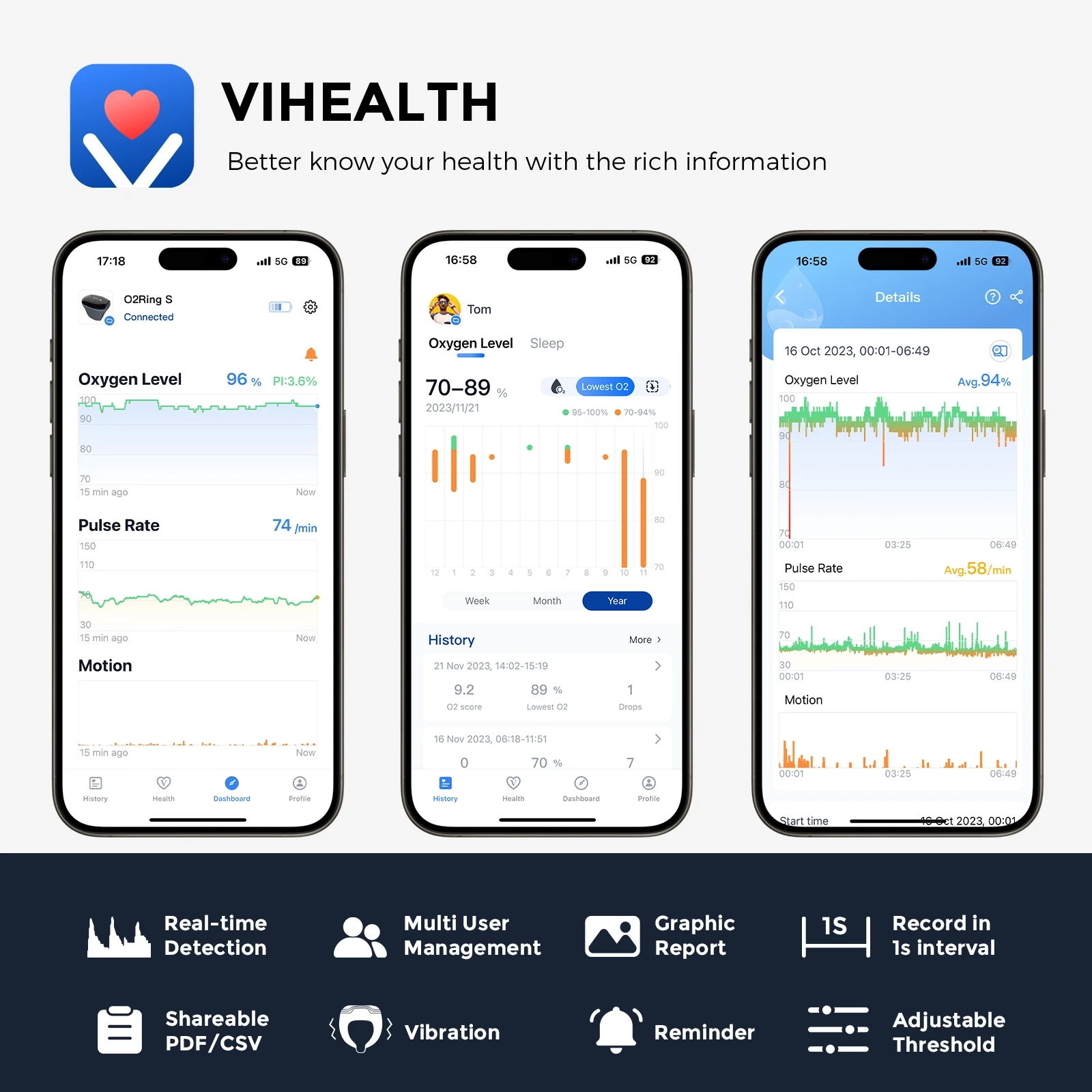
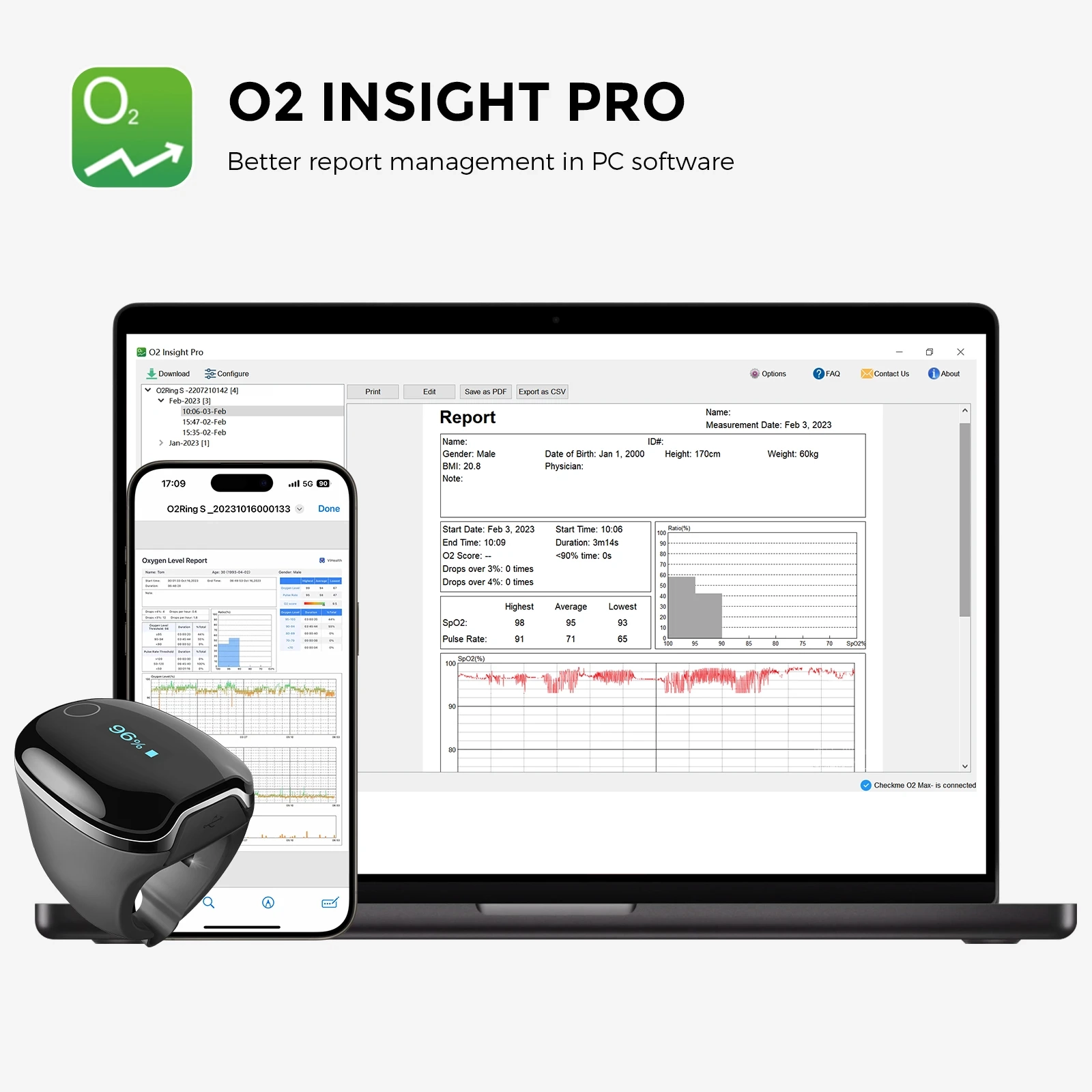
- Free app — PDF and CSV reports
- Soft silicone ring, worn all night


Delivery location required for AU, please enter a valid postcode.
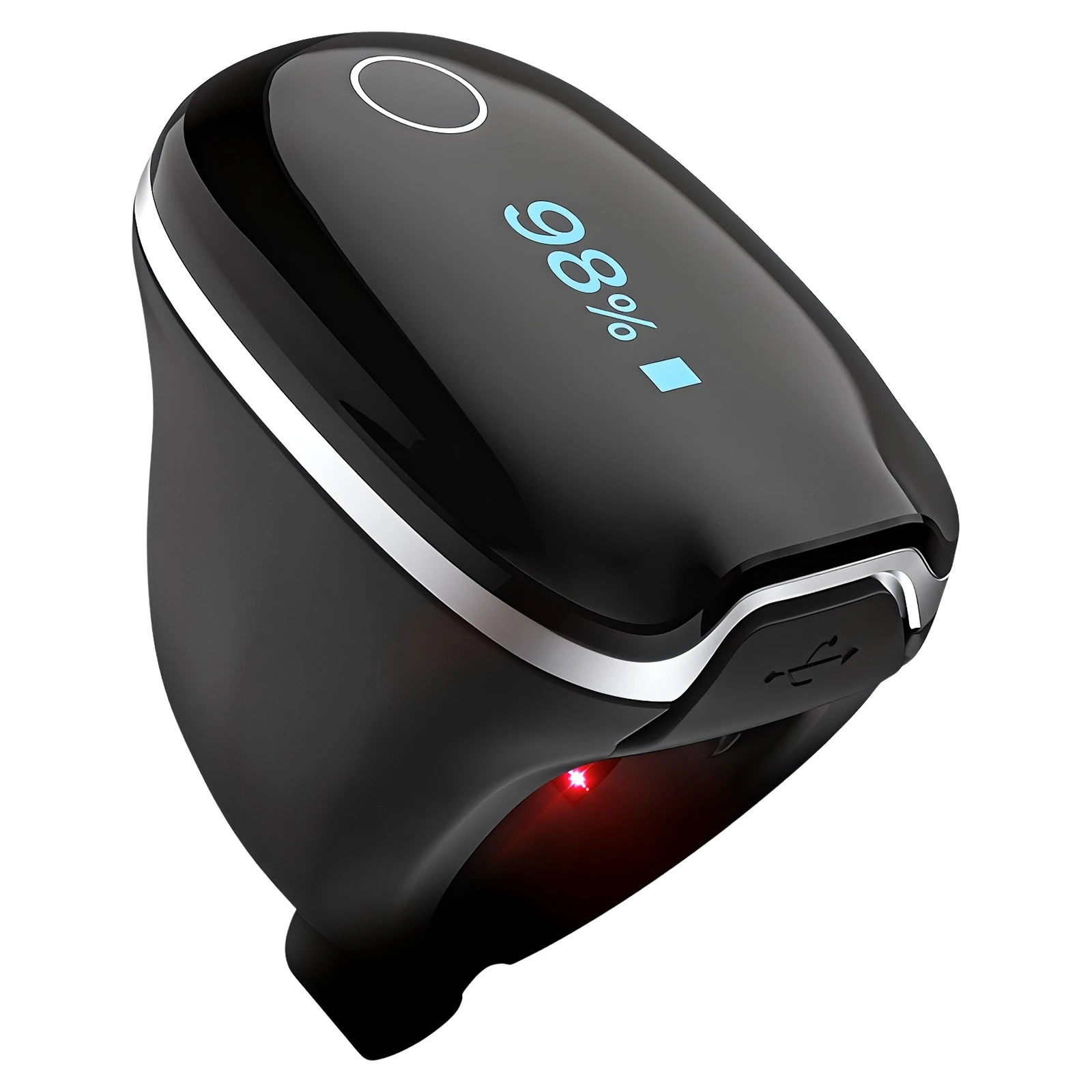
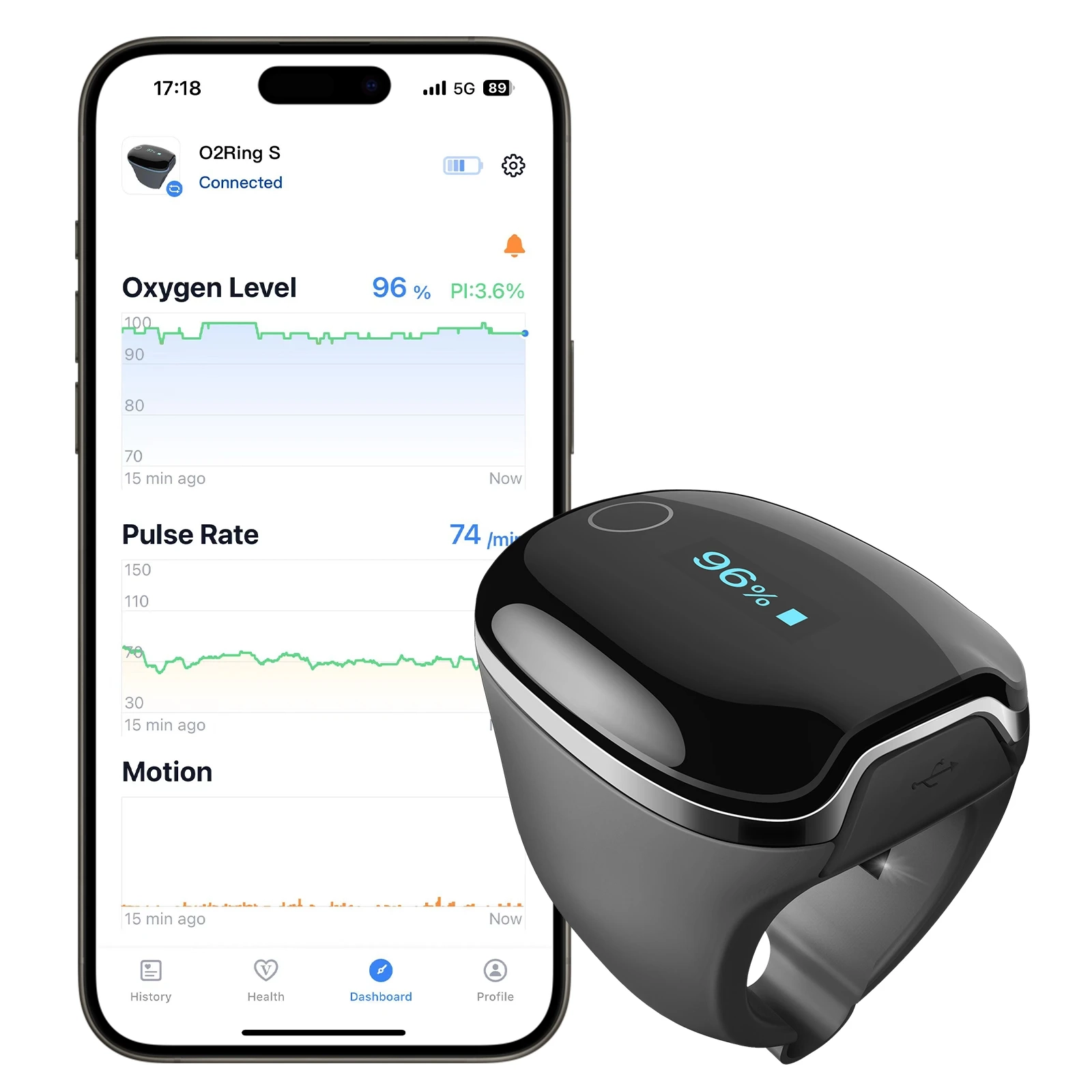
The Wellue O2Ring S is a wearable overnight pulse oximeter that records blood oxygen, pulse rate and movement every second, and vibrates silently if your oxygen drops. The updated O2Ring, now with a 24-hour battery and USB-C charging.
The Wellue O2Ring S is a wearable pulse oximeter that records your blood oxygen (SpO2), pulse rate and movement continuously through the night, and vibrates silently on your finger if your oxygen drops below a level you set. It is the updated version of the Wellue O2Ring, with second-by-second data storage, a 24-hour battery and USB-C charging.
What's Changed From the Original O2Ring
| O2Ring | O2Ring S | |
|---|---|---|
| Data storage interval | Every 4 seconds | Every 1 second |
| Battery life | up to16 hours | up to 24 hours |
| Charging | Micro USB | USB-C |
| Signal processing | 150Hz Standard filtering | 200Hz sampling, updated filtering |
| Weight | 15 g | 17 g |
Why the recording interval matters
Both rings measure every second. What changed is how often that measurement is kept. The original stored a reading every four seconds; the S stores every one.
That sounds like a technicality until you think about what you are looking for. The shape of a short dip — how fast it fell, how deep it went, how quickly it recovered — is the part that gets lost at the lower resolution, and short dips are precisely what a CPAP user is checking for.
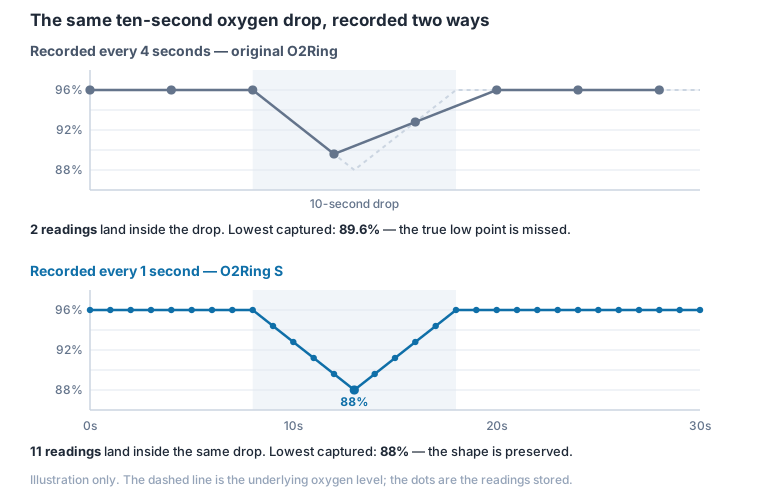
In the example above, a drop to 88% is recorded as a dip to 89.6% by the four-second interval, because no reading happens to land on the low point. Nothing is broken — the ring simply was not looking at that instant. On a long, gradual overnight trend this makes almost no difference. On brief events it is the difference between a shape and a couple of dots.
And what hasn't changed
Worth knowing before you decide. The stated accuracy is the same on both — ±2% between 80–99% SpO2, ±3% between 70–79% — so the S is described by Wellue as giving more stable readings through movement rather than a tighter tolerance. Onboard memory is unchanged at four sessions of up to ten hours. Bluetooth is still 4.0 BLE, the water resistance is still IP22, and the ring fits the same 55–80 mm range of finger sizes. The S is also 2 g heavier.
Key Features
- Records every second, all night — SpO2, pulse rate and motion, stored at full resolution rather than sampled down.
- Silent vibration alert — a gentle buzz on your finger when oxygen falls below your chosen threshold, with adjustable strength. No beeping, and nothing to wake your partner.
- Around 24 hours per charge — roughly three nights of overnight recording between charges, up from about 16 hours on the original.
- USB-C charging — the same cable as your phone, laptop or power bank.
- Works on its own — put it on and it starts. It stores up to four sessions on board and syncs over Bluetooth afterwards, so your phone does not need to stay connected all night.
- Free app, no subscription — charts each night and exports PDF or CSV reports you can hand to your GP or sleep specialist.
- Flexible silicone ring — fits finger circumferences from 55 to 80 mm, without the pressure or numbness a clip sensor causes over a full night.
Who Is This For?
Anyone who wants to know what their oxygen is actually doing overnight rather than at the single moment a fingertip oximeter is clipped on. That covers CPAP users checking whether their therapy is holding desaturations in check, people who snore or suspect sleep apnea and want something concrete to take to a GP, and anyone keeping an eye on overnight oxygen at home.
If you already own an O2Ring, you probably do not need this. A working ring on micro USB records the same parameters to the same stated accuracy. The upgrade is worth making if you are specifically interested in brief desaturations and want them resolved properly, or if the 16-hour battery has become a nuisance. Otherwise, keep what you have.
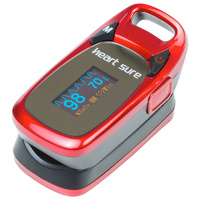
If you only want an occasional spot reading rather than a whole night, a fingertip unit like the Suresense Premium SpO2 oximeter or the Heart Sure A320 does that job for a fraction of the price. Our full range is on the pulse oximeters page.
Using It Alongside CPAP
A good average across a whole night can still hide brief oxygen drops caused by a mask leak, a pressure that is not quite right, or sleeping on your back. Your CPAP machine records what it delivered and the events it detected; it does not record what your blood oxygen did. The O2Ring S fills that gap from the other direction, and the vibration alert gives you something in the moment rather than only a report in the morning.
The recording exports as PDF or CSV, so you can bring it to an appointment, and users who keep their own therapy data can line the night's oxygen trace up against their CPAP events on one timeline — see the FAQ below. Our data management range covers the rest of the setup.
Using It Alongside an Oxygen Concentrator
If you have been prescribed supplemental oxygen, an overnight oximeter answers a question the concentrator itself cannot: your machine reports what it delivered, not what your blood actually did with it. A prescribed flow setting is chosen to hold your saturation in a target range, and the only way to see whether it is doing that while you sleep is to record the night.
Two things make that worth doing. The first is simply knowing — a setting that holds up comfortably when you are sitting reading may not be the same story at three in the morning, and a recording shows you the difference rather than leaving you to guess. The second is more practical: a nasal cannula can work loose or come off in the night, and it is one of the most common reasons someone wakes up having had far less oxygen than their prescription intended. The vibration alert is the part that helps here, because it responds while you are still asleep rather than telling you about it in the morning.
Take the report to whoever manages your oxygen. A flow rate is theirs to set and adjust — an oximeter is there to give them something real to look at, not to prompt you to change a setting yourself. If you are still choosing a machine, our oxygen concentrators range includes the Kingon P2-E portable models for daytime use and the continuous flow Kingon P2-TOC, which is the one suited to an overnight prescription.
What's in the Box
- Wellue O2Ring S smart ring pulse oximeter
- USB-C charging cable
- User guide
Frequently Asked Questions
No. It records what your oxygen did overnight; it does not diagnose anything. Sleep apnea is diagnosed from a sleep study, which measures airflow, breathing effort and sleep stage as well as oxygen — and not every apnea event produces a large oxygen drop, so a clean-looking oxygen trace does not rule it out either.
Where it genuinely helps is turning "I think I stop breathing at night" into something specific. A week of recordings showing repeated overnight drops is far more useful to hand a GP than a description of how you feel, and it exports as a PDF for exactly that. Take it to a doctor rather than drawing your own conclusion from it.
It is one flexible size and fits finger circumferences from 55 to 80 mm — roughly 2.2 to 3.1 inches. Measure around the middle of the finger you would wear it on, with a tape measure or a strip of paper and a ruler.
Fit matters more than it sounds. Too loose and the sensor loses contact when you move, which shows up as gaps in the recording. Too tight and it restricts circulation, which weakens the signal. It should feel secure without leaving a mark.
It is designed not to. An alert starts light and builds over about 40 seconds, and stops the moment your readings return to normal — so a brief dip that resolves on its own often ends the alert before it gets strong enough to wake you. Once an alert stops there is a 20-second pause before another can begin, and tapping the button on top silences it for the same period.
If it is still too much, you have three options: raise the drop it takes to trigger an alert, reduce the vibration strength, or turn the alert off entirely and simply read the report in the morning. Plenty of people do the last one.
That number belongs to whoever manages your therapy, not to us — it depends on your condition and on what is normal for you. What we can tell you is what the device allows: the oxygen alert is adjustable from 80% to 95% in 1% steps, with separate high and low pulse rate alerts alongside it.
If you are not sure where to set it, ask your GP or sleep specialist. In the meantime you can leave the vibration off and just read the morning report, which records every drop whether or not an alert fired.
Mostly in what gets kept. General-purpose wearables usually take a spot reading at intervals — sometimes minutes apart — and are built around all-day wellness trends. The O2Ring S stores a reading every second for the whole night, which is what makes short desaturations visible at all.
The other practical difference is the output. This produces a PDF or CSV of the night that you can hand to a GP or sleep specialist, or import into CPAP software. Most general-purpose wearables keep their data inside their own app.
A difference of a couple of percent between any two pulse oximeters is normal, and there are three ordinary reasons for it.
- Where it reads. The ring sits at the base or middle of your finger; a clip reads at the fingertip, where blood flow and tissue thickness are different.
- How it averages. Every manufacturer uses a different averaging window, so two devices watching the same finger report slightly different numbers at the same moment.
- Your circulation. Cold hands, a loose fit or poor circulation affect any pulse oximeter.
The ring is pre-calibrated and cannot be adjusted to match another device. It is built to show trends and events across a night, not to replace a clinical measurement.
OSCAR supports Wellue oximeters. You download the session using Wellue's free desktop software over the supplied cable, then import it in OSCAR under Data → Import Wellue Data. SleepHQ users export the recording and upload it. Either way the night's oxygen sits alongside your CPAP events on one timeline.
| Specification | Detail |
|---|---|
| Recorded parameters | Blood oxygen (SpO2), pulse rate, motion |
| SpO2 measurement range | 70%–100% |
| SpO2 accuracy | ±2% (80%–99%); ±3% (70%–79%) |
| Pulse rate range | 30–250 bpm |
| Pulse rate accuracy | ±2 bpm or ±2%, whichever is greater |
| Measurement interval | 1 second |
| Data storage and app display interval | 1 second |
| Built-in memory | 4 sessions, up to 10 hours each |
| Connectivity | Bluetooth 4.0 BLE |
| Battery | Rechargeable lithium-polymer, 3.7 V DC — around 24 hours typical use |
| Charge time | Approx. 3 hours |
| Charging port | USB-C |
| Fits finger circumference | 55–80 mm (2.17"–3.15") |
| Weight | 17 g |
| Dimensions | 38 × 30 × 38 mm (1.5" × 1.2" × 1.5") |
| Dust and water resistance | IP22 |
| App compatibility | iOS 9.0 or later; Android 5.0 or later, with Bluetooth 4.0 BLE |
| Desktop software | Windows 7/8/10/11; macOS 10.15.3 or later |
| Report export | PDF and CSV |
| SKU | WELO2RING-S |
| Model # | O2Ring-S |
| ARTG # | 398731 |
| Brand | Wellue |
| Shipping Weight | 0.1250kg |
| Shipping Width | 0.090m |
| Shipping Height | 0.070m |
| Shipping Length | 0.090m |
| Shipping Cubic | 0.000567000m3 |
More From This Category