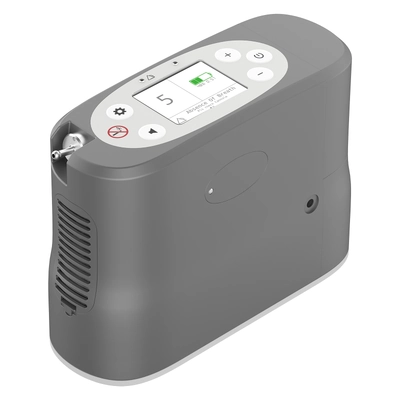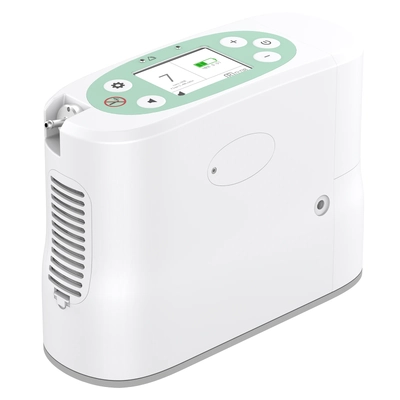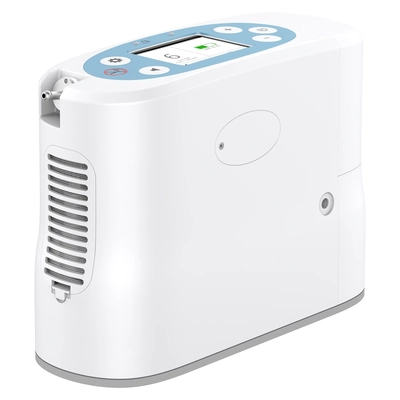
Kingon P2-TOC Continuous Flow Oxygen Concentrator
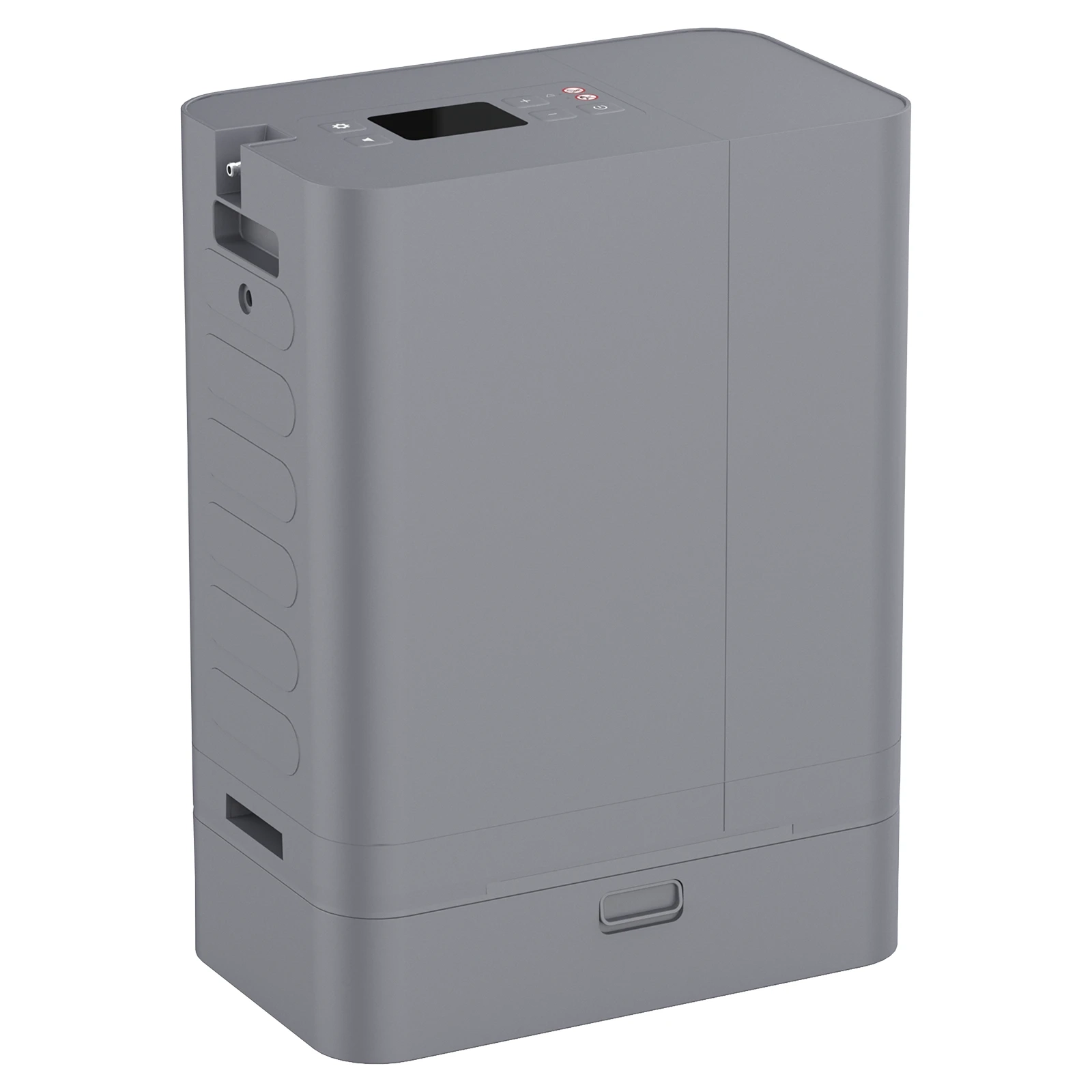
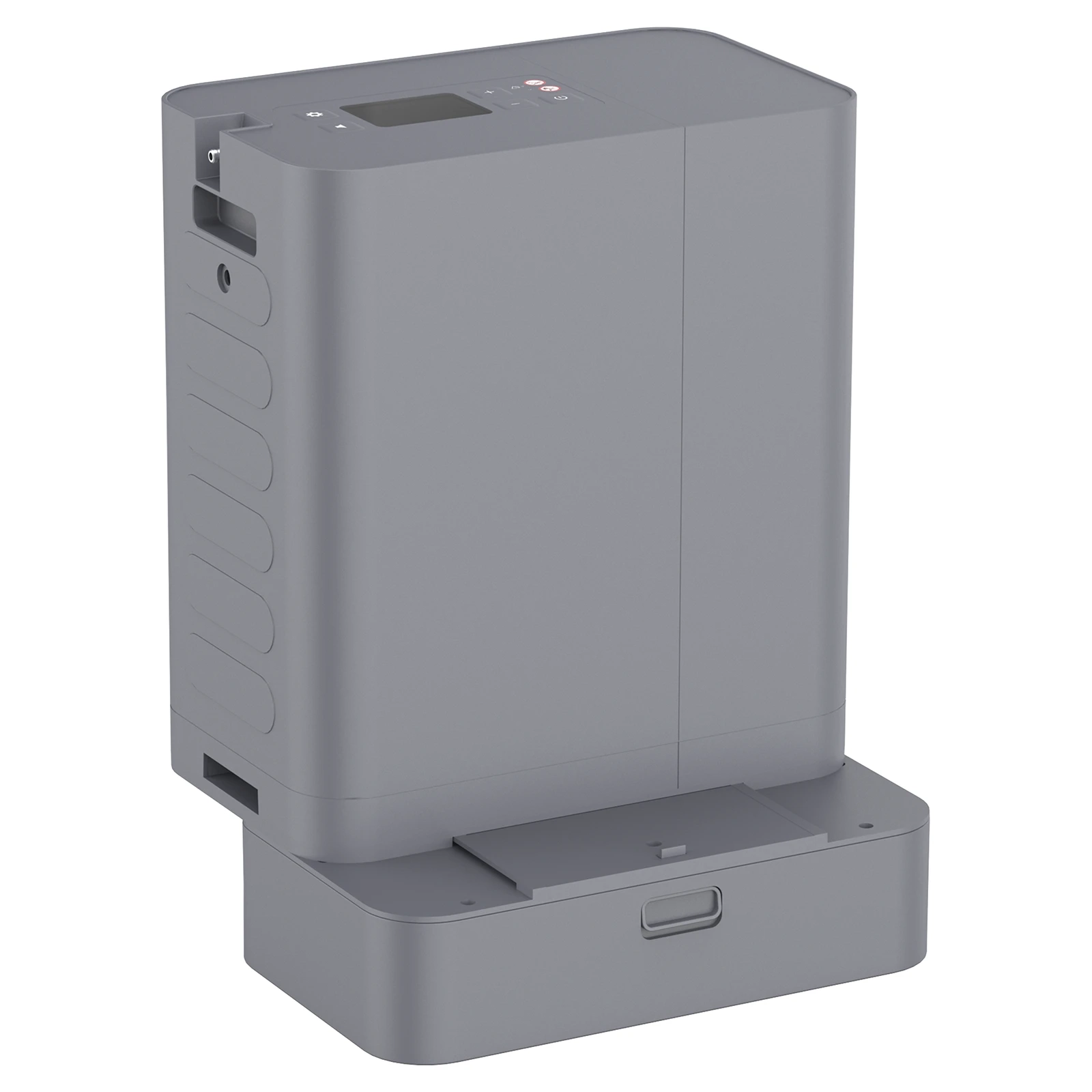
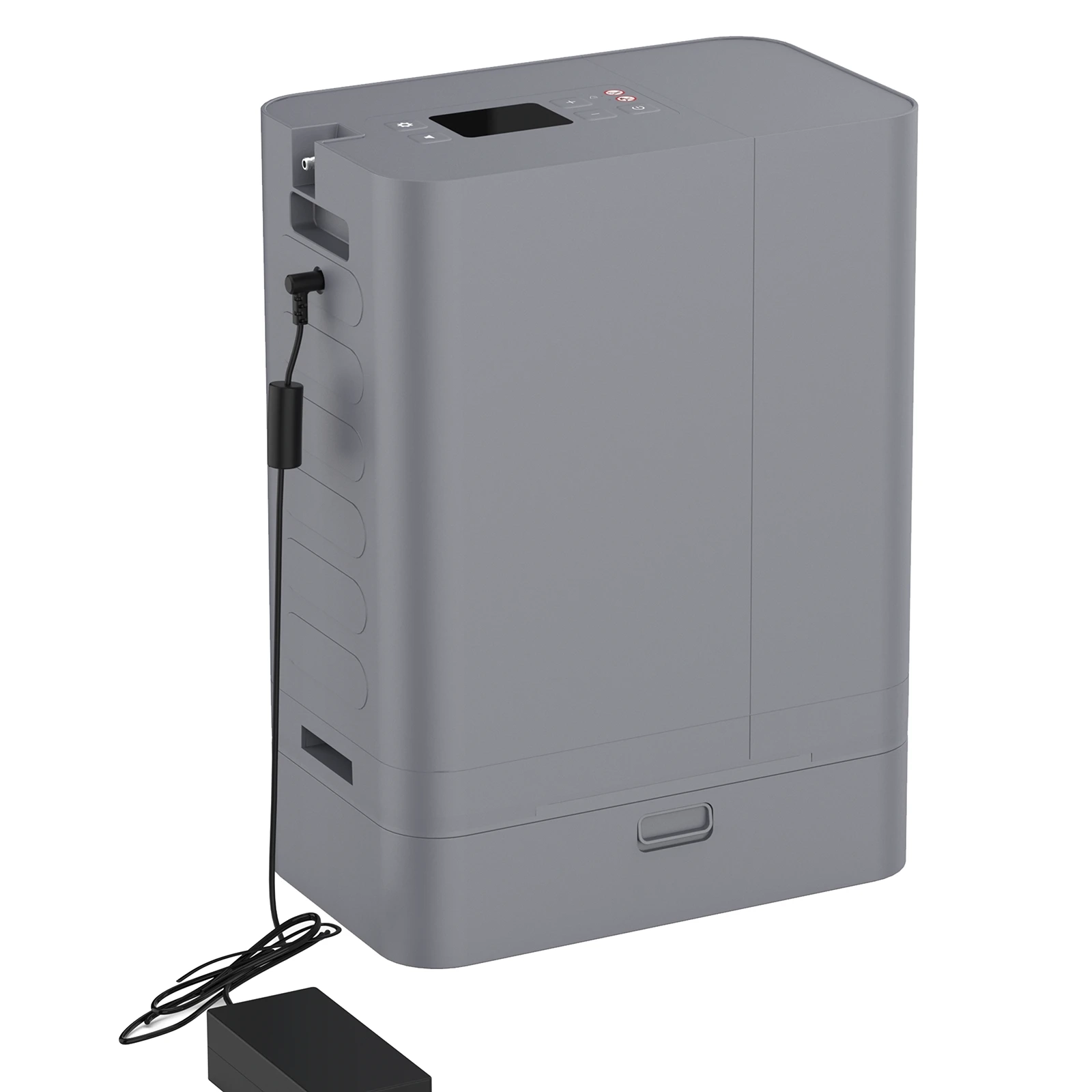
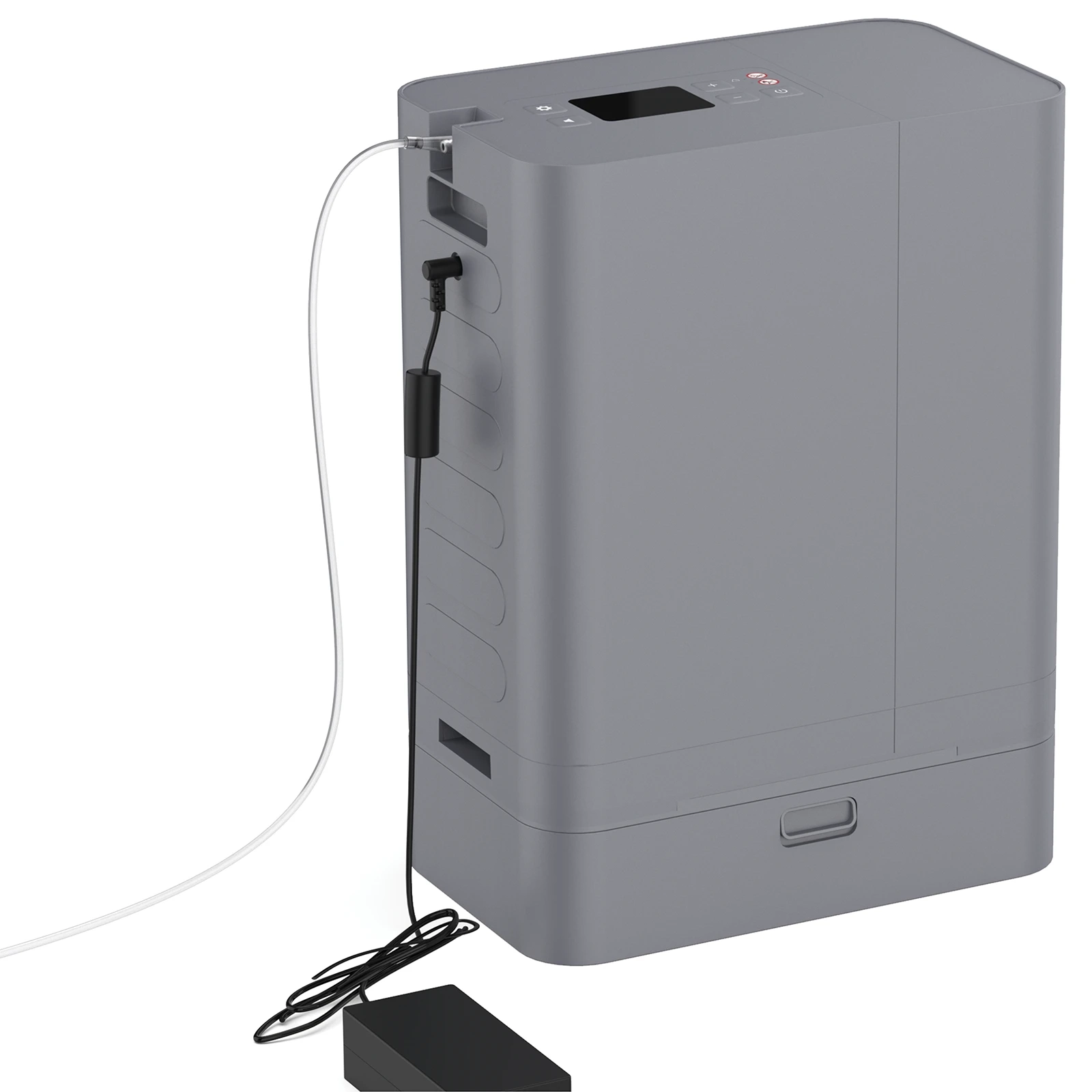

SKU: KINP2TOC | MPN: P2TOC
- Continuous flow and pulse dose in one
- Up to 3 LPM continuous, five settings
- Rated for 24-hour use on mains power
- Quiet variable-speed compressor
- Built-in fire breaker safety cut-off
- Cart, charger and 12 cannulas included


Delivery location required for AU, please enter a valid postcode.
The Kingon P2-TOC delivers both continuous flow to 3 LPM and pulse dose to 2,000 ml/min at 90% oxygen concentration. Rated for 24-hour use on mains power and up to 6h 36min on battery. Cart, external charger and 12 cannulas included.
The Kingon P2-TOC is the only concentrator in the Kingon range that delivers both continuous flow and pulse dose oxygen — up to 3 LPM continuous across five settings, or up to 2,000 ml/min pulse across ten. Connected to mains power it is rated for 24 hours a day, and on its battery module it runs up to 6 hours 36 minutes. For most people that means one device doing the job of two: the concentrator that sits in the lounge room and the one you take out.
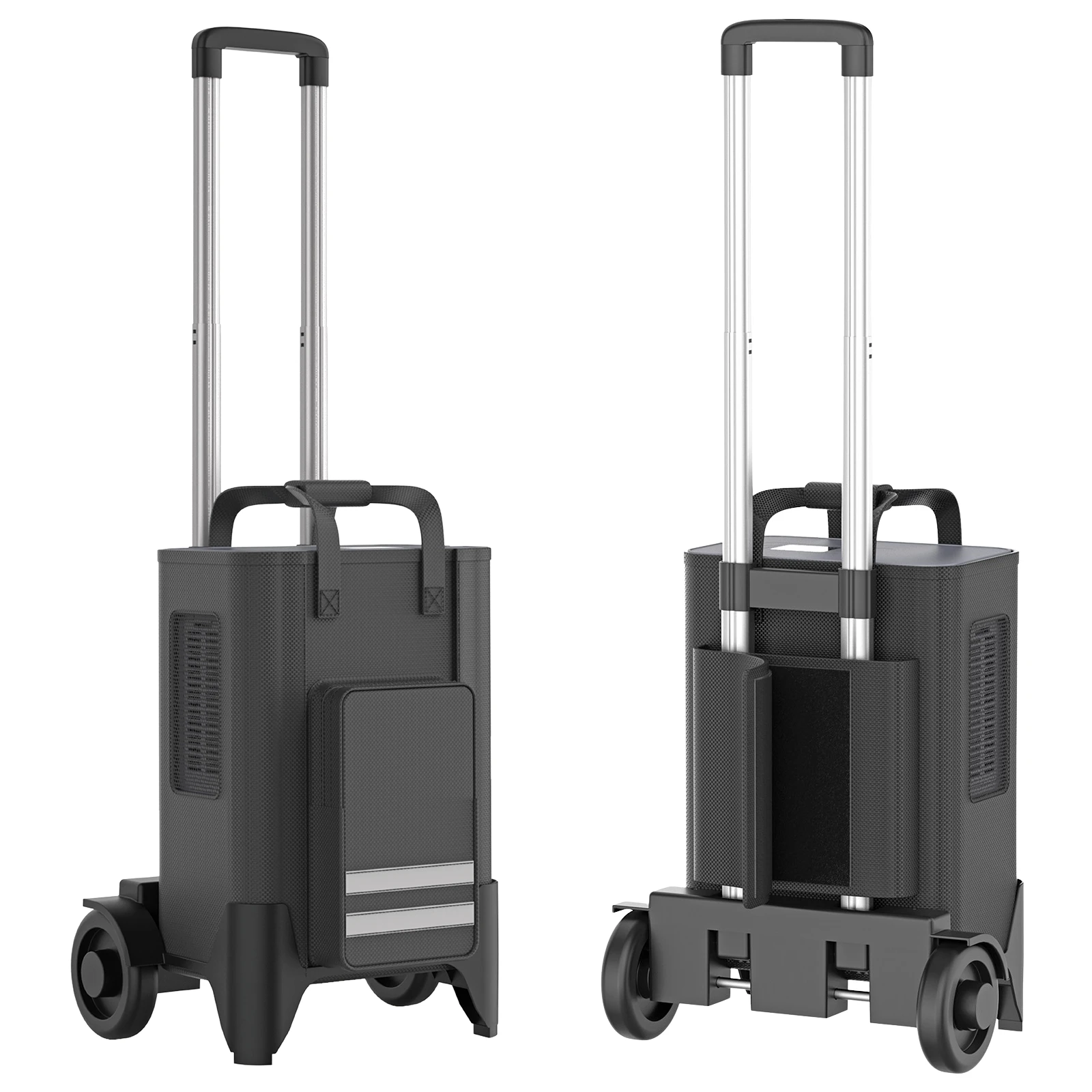
It weighs 8kg. That is worth saying in the second sentence rather than the fine print. The P2-TOC travels on its included cart, not over your shoulder, and it is a different proposition to the 1.98kg P2-E range. If you need something you can carry all day and your prescription is pulse dose, those are the models to look at instead.
One Device Instead of Two
Anyone on continuous flow oxygen usually ends up with two machines — a large stationary unit at home, and something smaller and more limited for leaving the house. The P2-TOC is built to be both. Its manual rates it for continuous duty, 24 hours a day while connected to AC or DC power, so it can run overnight beside the bed and then come with you in the morning on its battery.
That matters financially as much as practically. Two devices means two purchases, two sets of consumables and two things to service.
Five Continuous Settings, Ten Pulse Settings
The P2-TOC covers both delivery methods in one machine, with 90% oxygen concentration (−3% / +6%) maintained across every setting in both modes.
| Mode | Settings | Range |
|---|---|---|
| Continuous flow | Five (1–5) | 1.0, 1.5, 2.0, 2.5 and 3.0 LPM |
| Pulse dose | Ten (1–10) | 0.2 to 2.0 L/min, in 0.2 steps |
Which mode you use is your prescriber's decision, not a preference. Continuous flow is typically prescribed where a steady measured rate is clinically necessary; pulse dose conserves battery by delivering only as you breathe in. Having both in one device means a change to your prescription does not necessarily mean a change of machine.
Battery Life
Figures below are for the BA-M650 battery module. Actual duration varies with temperature, altitude and breathing rate.
| Pulse setting | Duration | Continuous flow | Duration |
|---|---|---|---|
| 1 | 6 hours 36 minutes | 1.0 LPM | 3 hours 6 minutes |
| 2 | 4 hours 54 minutes | 1.5 LPM | 2 hours 30 minutes |
| 3 | 3 hours 54 minutes | 2.0 LPM | 1 hour 54 minutes |
| 4 | 3 hours 36 minutes | 2.5 LPM | 1 hour 24 minutes |
| 5 | 3 hours 18 minutes | 3.0 LPM | 1 hour 12 minutes |
| 6 | 3 hours | ||
| 7 | 2 hours 36 minutes | ||
| 8 | 2 hours 18 minutes | ||
| 9 | 2 hours | ||
| 10 | 1 hour 48 minutes |
Continuous flow is battery-limited by its nature — it is producing oxygen constantly rather than in bursts — so for extended continuous therapy, AC power is what the manual recommends. Recharging takes up to 5 hours, or about 3 hours 24 minutes to reach 90% in standby.
Running it from the car
Worth knowing before you plan a long drive: on DC car power the P2-TOC is limited to pulse settings 1–8, or 1 to 2.0 LPM in continuous mode. On mains power there is no such limit. If your prescribed setting sits above those figures, plan your stops around AC power rather than assuming the car will carry you.
Quieter by Design
Most concentrators run their compressor flat out regardless of what you have asked for. The P2-TOC uses a variable-speed drive compressor that matches motor speed to the oxygen actually being delivered, which means less noise, less heat and lower power draw at lower settings. It measures 40 dB(A) on pulse setting 2 and 45.3 dB(A) at 3 LPM continuous.
Built-In Fire Breaker
Oxygen makes fire start more easily and spread faster, which is why every safety instruction for oxygen therapy centres on flames and smoking. The P2-TOC has a countermeasure built in.
A temperature sensor at the oxygen outlet detects if an open flame has reached the nozzle. If it does, the device shuts off oxygen flow immediately, sounds three loud beeps every five seconds, turns off the oxygen indicator light, and powers down after ten minutes. If this ever happens, do not restart the unit for at least 30 minutes after the flame has been removed, and contact us.
It is a feature you would hope never to rely on. It is also the kind of engineering worth knowing is there — but it sits behind the room precautions in our guide to using oxygen safely at home, not in front of them.
Who Is This For?
The P2-TOC suits someone prescribed continuous flow oxygen who wants one machine rather than two — running at home around the clock on mains, then coming out for appointments, family visits and travel on its cart. It also suits anyone whose prescription may move between pulse and continuous delivery, since both live in the same device.
It is not the right choice if you want something to carry on your shoulder; at 8kg with a cart, this is wheeled, not worn. It is contraindicated in patients with oxygen poisoning, and the manufacturer states it is not intended for use with a tracheotomised patient. It is also not a life-support device. If you are unsure whether this or a lighter pulse dose model fits your prescription, call us before ordering.
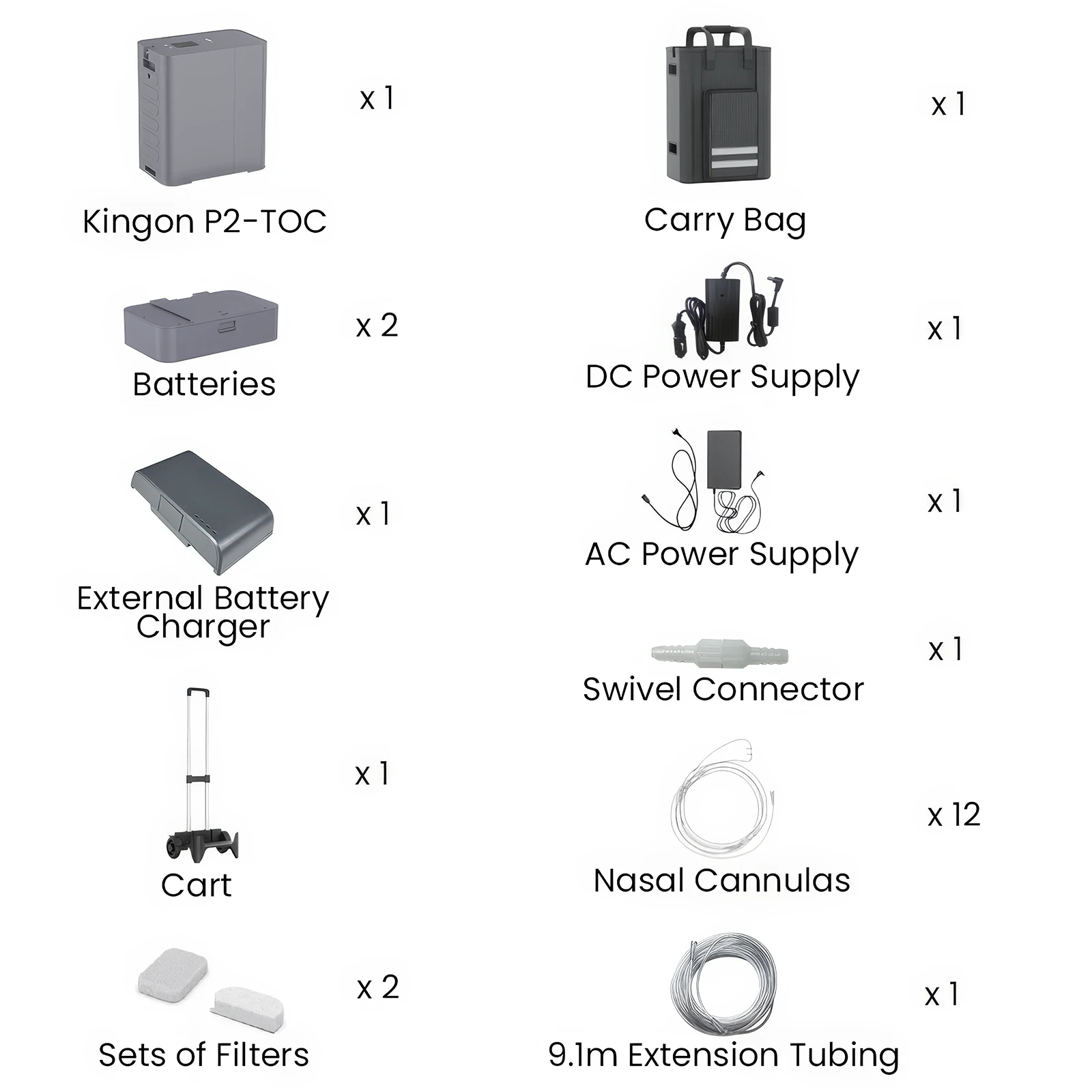
What's in the Box
- 1 × Kingon P2-TOC transportable oxygen concentrator
- 2 × lithium-ion battery modules
- 1 × external battery charger
- 1 × cart
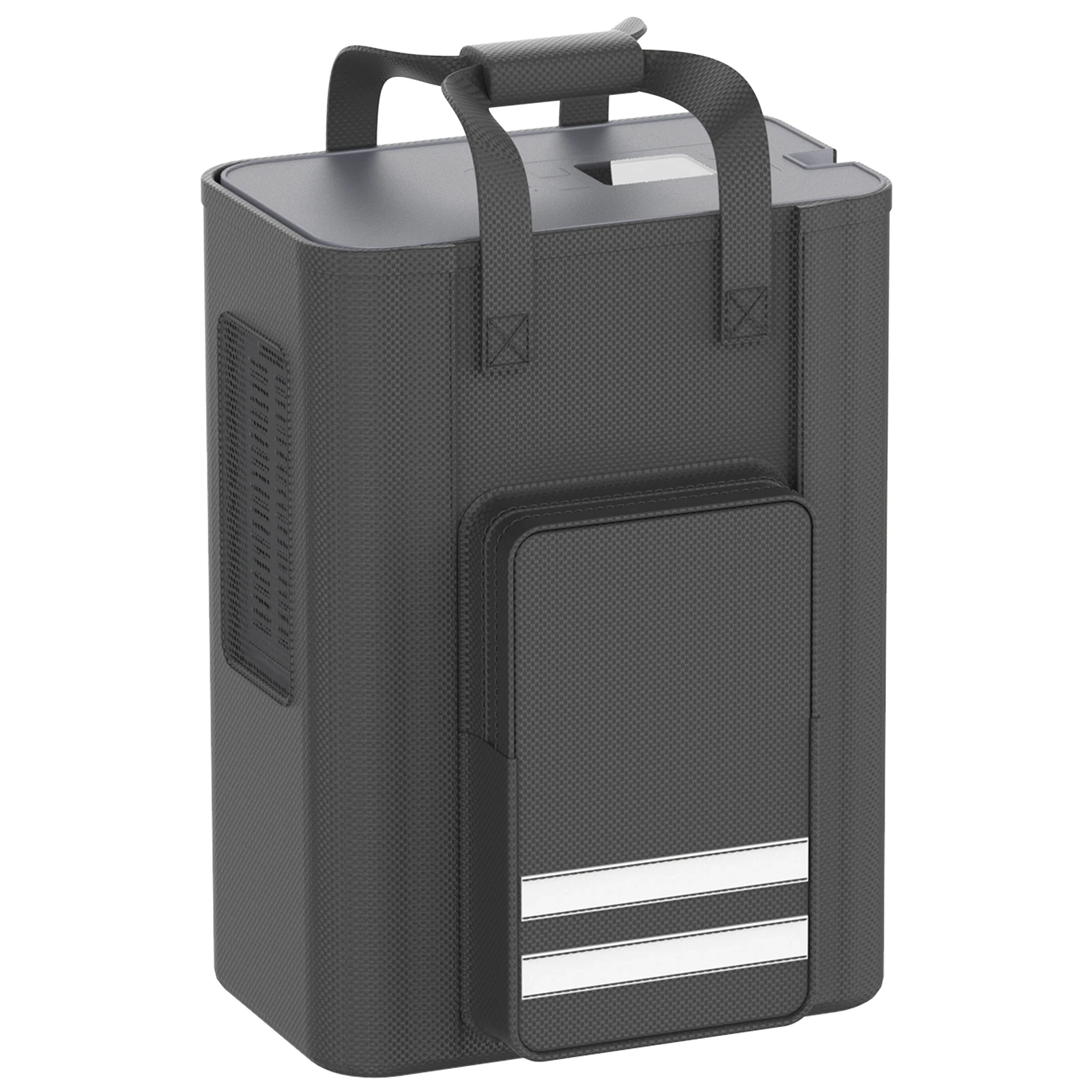
- 1 × carry bag
- 1 × standard AC power supply, for charging at home
- 1 × portable DC power supply, for charging in the car
- 12 × nasal cannulas — a year's supply
- 1 × extension tubing
- 1 × swivel connector
- 2 × sets of air filters
Standard inclusions can vary by bundle or promotion — call us if you need a configuration confirmed before ordering.
Maintenance and Expected Life
The manufacturer publishes clear service intervals, which is more than most do:
- Intake filter FI-T001 — clean weekly, replace every 6 months.
- Intake filter FI-T002 — clean monthly, replace annually.
- Molecular sieve beds — 24 months, replaced by a technician.
- Battery module — 500 full charge cycles.
- Device — 5 years expected service life.
The unit must not be run without both intake filters fitted.
Alert Codes
The P2-TOC reports faults as numbered codes on its display, and tells you whether it will keep running or shut itself down. Expand a section below to look one up. If you feel breathless, light-headed or unwell, treat that as the emergency rather than the alarm — switch to your backup oxygen supply and seek medical help. In an emergency call 000.
Power, startup and temperature — E01 to E07
| Code | Meaning | Condition | Response | What to do |
|---|---|---|---|---|
| E01 | Power supply fail | System voltage below 10.5V | Shuts down after 10 seconds | Connect to mains power or fit a charged battery module. |
| E02 | System startup fail | Concentration below 87% for more than 120 seconds after startup | Alarm only | Turn off and restart. Contact us if it continues. |
| E03 | Gas supply fail | Flow or concentration below normal after injection | Alarm only | Check the cannula and tubing for blockages, then restart. |
| E04 | Battery module hot | Battery above 65°C | Shuts down after 10 seconds | Run on the adapter only, and let the battery module cool. |
| E05 | System hot | System above 60°C | Shuts down after 10 seconds | Move somewhere cooler and check the vents are unobstructed. |
| E06 | Battery module cold | Battery below 0°C | Alarm only | Move somewhere warmer and let the battery reach room temperature. |
| E07 | System cold | System below 0°C | Alarm only | Bring the unit to room temperature before operating. |
Battery and mechanical failures — E08 to E0C
| Code | Meaning | Condition | Response | What to do |
|---|---|---|---|---|
| E08 | Battery module depleted | Charge below 5% with no adapter | Shuts down after 10 seconds | Connect the adapter or fit a charged battery module. |
| E09 | Cooling fan fail | Cooling fan failure detected | Shuts down after 10 seconds | Turn off and contact us for service. |
| E0A | Valve check fail | Valve switch failure detected | Shuts down after 10 seconds | Turn off and contact us. |
| E0B | Compressor fail | Compressor failure detected | Shuts down after 10 seconds | Turn off and contact us. |
| E0C | Sieve bed fail | Sieve bed failure or invalid operation | Shuts down after 10 seconds | Turn off and contact us. The sieve bed is replaced by a technician. |
Oxygen and gas delivery — E0D to E11
| Code | Meaning | Condition | Response | What to do |
|---|---|---|---|---|
| E0D | Tank pressure fail | Tank pressure fault detected | Alarm only | Turn off and restart. Contact us if it continues. |
| E0E | Gas obstruction | Tubing or nasal cannula blocked | Alarm only | Check the cannula and tubing along their full length, then restart. |
| E0F | Gas delivery fail | No delivery detected after injection | Alarm only | Check the cannula is connected correctly, then restart. |
| E10 | Oxygen sensor fail | Oxygen sensor failure detected | Alarm only — clears if the condition improves | Contact us if it persists. |
| E11 | Breath sensor fail | Breath sensor fault, or cannula kinked or blocked | Alarm only — clears if the condition improves | Check the cannula for kinks and blockages. Contact us if it persists. |
Battery and oxygen warnings — E12 to E17
| Code | Meaning | Condition | Response | What to do |
|---|---|---|---|---|
| E12 | Oxygen concentration below 50% | Below 50% for more than 10 minutes | Alarm only — clears if the condition improves | Stop using the unit and contact us immediately. |
| E13 | Low battery module | Charge between 5% and 20% with no adapter | Alarm only | Charge now, or swap to your second battery module. |
| E14 | Oxygen concentration below 87% | Below 87% for more than 10 minutes | Alarm only | Check the cannula and restart. Contact us if it continues. |
| E15 | Absence of breath | No breath detected for more than 60 seconds | Alarm only — the device enters auto-pulse mode until breath is detected | Check cannula position and breathe through your nose. If it continues, seek assistance. |
| E16 | Low input voltage | Adapter input below 17.0V | Switches to battery module until input exceeds 18V | Check the adapter connection, or continue on the battery module. |
| E17 | Battery module exhausted | Over 500 charge cycles, or battery health below 50% | Alarm only | Contact us to arrange a replacement battery module. |
Fire breaker alarm
The fire breaker is not a numbered code. If the temperature sensor detects an open flame reaching the oxygen nozzle, the P2-TOC stops oxygen flow, sounds three loud beeps at five-second intervals, switches off the oxygen indicator light, and shuts down after ten minutes.
If this happens, move away from the flame source and do not restart the unit for at least 30 minutes after the flame has been removed. Contact us before returning it to use.
Codes that shut the device down are not user-serviceable and repeatedly restarting will not fix them. If you see E09, E0A, E0B, E0C, E10 or E12, contact us rather than persisting. Note that these codes are specific to the P2-TOC — if you own a P2-E, P2-E6 or P2-E7, use our Kingon P2-E alert codes guide instead.
Using Oxygen Safely at Home
The fire breaker above is a last line of defence. The precautions that matter more are about the room: three metres between the concentrator and any flame, no candles, smoking or vapes, water-based products only on your face and hands, and nothing covering the intake or vents.
Because this model is rated to run around the clock, two things are worth doing before it arrives. Ring your electricity retailer and register as a life support customer — it is free, it protects your supply from disconnection, it entitles you to written notice of a planned outage, and rebates are available in New South Wales, Victoria and the ACT. Then plan for a blackout: keep a charged battery and a torch beside the machine, never candles.
Our full guide to using oxygen safely at home covers the rest, including what to tell emergency services. A printed copy comes in the box.
Warranty and Australian Support
The P2-TOC carries a three-year standard warranty, extendable to five years free of charge when you register the device with Kingon within 14 days of purchase. The battery module and sieve bed are covered for 12 months. Kingon maintains a national Australian support network, so servicing does not mean shipping your device overseas.
Oxygen is a prescription therapy
Supplemental oxygen must only be used in line with a prescription from a qualified medical practitioner, and the P2-TOC is designed to be used with a single-lumen nasal cannula. Have your mode and setting confirmed for this device rather than carried across from another, and verify it with a pulse oximeter at rest and during your usual activity. The manufacturer also recommends keeping a backup oxygen supply available in case of a power outage or fault.
| Specification | Detail |
|---|---|
| Oxygen delivery | Pulse dose and continuous flow |
| Oxygen concentration | 90% (−3% / +6%) at all settings, both modes |
| Continuous flow | Five settings — 1.0, 1.5, 2.0, 2.5, 3.0 LPM |
| Pulse dose | Ten settings — 0.2 to 2.0 L/min |
| Weight | 8.0 kg ± 0.1 kg including battery module |
| Dimensions (L × W × H) | 28.2 × 17.1 × 38.2 cm |
| Noise level | 40 dB(A) at pulse setting 2; 45.3 dB(A) at 3 LPM continuous (Prüfmethode 14-1 10/2018 MDS-Hi) |
| Display | 2.8" colour LCD |
| Warm-up time | 5 minutes to rated flow and concentration |
| Breathing frequency range | 10 to 40 breaths per minute |
| Trigger sensitivity | ≤ −0.12 cm H₂O, delivery within 10 ms of inspiration |
| Outlet pressure | Pulse 20 PSI ±10%; continuous 5 PSI ±10% |
| Battery module | BA-M650 — 14.4 V DC, 6.6 Ah + 6.6 Ah |
| Battery duration | Up to 6 hours 36 minutes on pulse setting 1 |
| Recharge time | Up to 5 hours; approx. 3 hours 24 minutes to 90% in standby |
| AC power | 100–240 VAC, 50–60 Hz |
| DC power | 11–16 V DC input. Limited to pulse settings 1–8 and 1–2.0 LPM continuous |
| Continuous operation | 24 hours a day on external AC or DC power |
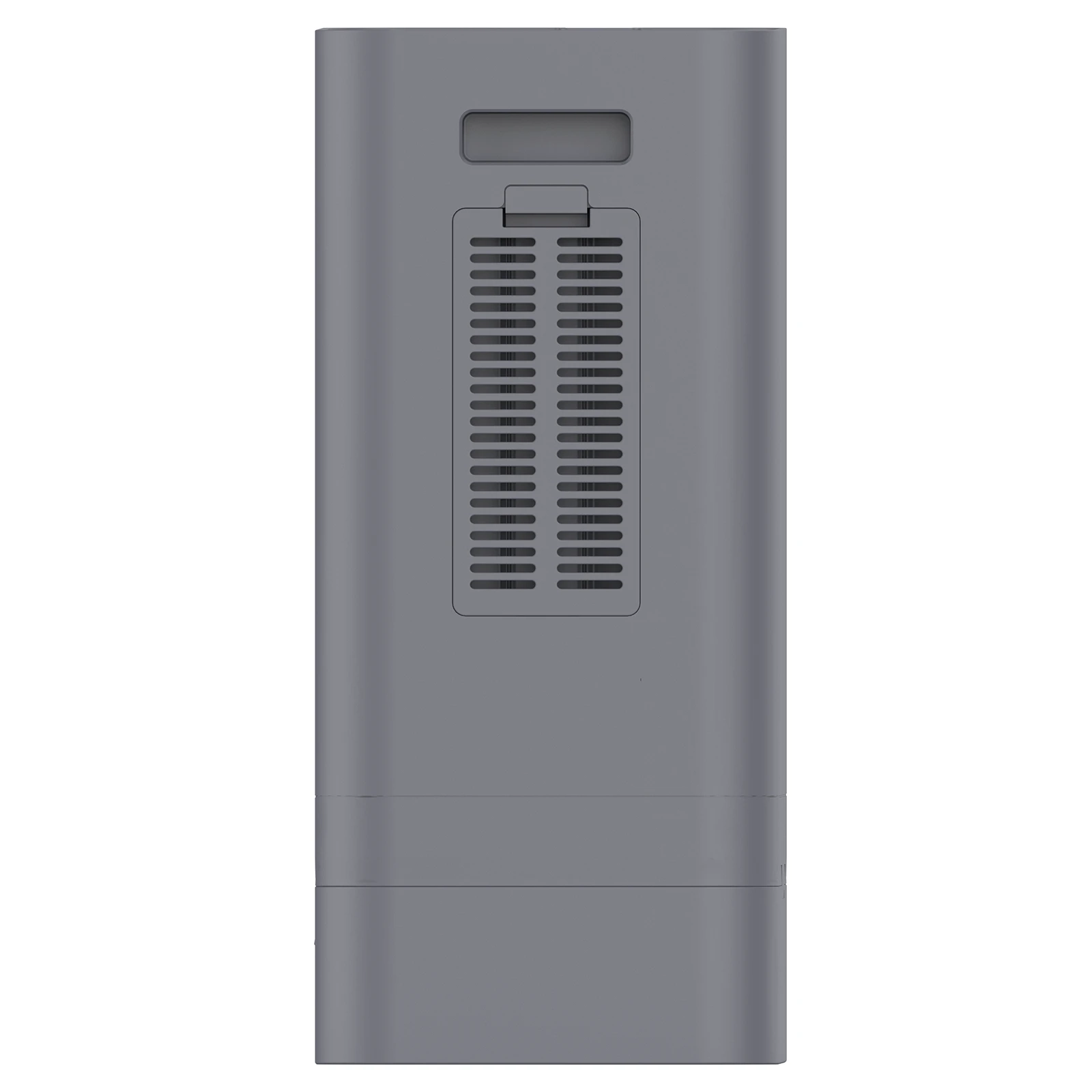
| Filtration | Two intake filters (FI-T001 and FI-T002) plus pre-filter cover |
| Sieve bed | Molecular sieve, 24-month expected life, technician-replaced |
| Safety | Built-in fire breaker; 23 alarm types; audio alarm ≥ 45 dB(A) |
| Operating environment | 5°C to 40°C, 10–90% humidity non-condensing, 0 to 3,048 m altitude |
| Classification | Class II, Type BF, IP22. Not for cardiac application. Not life-supporting |
| Air travel | Manufacturer states conformity with applicable FAA requirements for POC carriage and use on board aircraft |
| Regulatory | Included in the TGA. ARTG — ID 321141 |
| Warranty | 3-year standard, extending to 5 years total on registration within 14 days; 12 months on battery module and sieve bed |
| SKU | KINP2TOC |
| Model # | P2TOC |
| ARTG # | 321141 |
| Brand | Kingon |
| Shipping Weight | 8.0000kg |