The Complete Guide to CPAP Hoses: Universal Fit for All Masks - Except One
Your CPAP hose does one job, every night: deliver pressurised air from your machine to your mask. When it works, you barely notice it. When it cracks, kinks, or loses pressure, your therapy stops working — and you wake up tired wondering why.
This guide covers what you need to know about CPAP hoses: the difference between 22mm and 15mm tubing, when a hose will or won't fit your machine, why heated tubing is machine-specific while non-heated tubing is largely universal, and how to keep your hose performing for as long as it should.
What a CPAP Hose Does
The hose is the link between your CPAP machine and your mask. It carries a continuous stream of pressurised air, set to the prescription level your sleep physician programmed into your machine. Without it — or with a hose that leaks, kinks, or has cracked along the way — the therapy your machine is doing simply doesn't reach you.
Hoses also play a role in managing humidity. If you use a humidifier, the warm moist air leaving the machine has to travel along the tube to your mask. In cool rooms, that warm air can lose heat to the surrounding environment as it travels, causing the moisture inside the tube to condense. This is known as rainout, and it's one of the most common comfort complaints in CPAP therapy.
What Is Rainout?
Rainout happens when humidified air cools inside the tube and the moisture condenses back into water droplets. You might notice it as gurgling sounds during therapy, a damp feeling inside the mask, or water collecting at the low points of the hose. In severe cases, droplets can be pushed up into your mask and onto your face — not a pleasant way to be woken at 3am.
Rainout is most common when there is a big temperature difference between your humidified air and your bedroom — for example, when air conditioning runs through the night, or in winter when the bedroom is cold. Heated tubing prevents rainout by keeping the tube wall warm enough that the moist air doesn't cool and condense before it reaches your mask. For those who don't have heated tubing, a tubing wrap (an insulating sleeve over the hose) reduces heat loss along the tube — a useful, lower-cost option for occasional rainout in colder months.
CPAP Hose Sizes Explained: 22mm Cuffs vs 15mm SlimLine
Two dimensions matter when talking about CPAP hose sizes — and they are often confused.
The 22mm cuff is the diameter at each end of the hose, where it connects to the machine outlet and the mask elbow. This is the industry-standard connector size used by nearly every CPAP machine and mask on the market. It is what allows masks from one brand to be used with machines from another. Standard tubes and SlimLine tubes both use 22mm cuffs at the connection points.
The body diameter is the internal width of the tube itself — either 22mm (standard) or 15mm (SlimLine). This is what differs between hose types, and it matters because your CPAP machine adjusts air pressure based on which body diameter you are using. A 15mm tube has more internal resistance than a 22mm tube, so the machine compensates by pushing air slightly harder to deliver your prescribed pressure at the mask.
The takeaway: 22mm cuffs connect to almost every mask and machine, but the body diameter of the tube needs to match what your machine expects. Always use the manufacturer-specified tube for your CPAP machine to ensure accurate pressure delivery.
Heated vs Non-Heated Tubing — The Critical Compatibility Difference
Here's something many people get caught out by when replacing a hose: a non-heated 22mm tube fits almost any CPAP machine, but a heated tube only fits the specific machine it was designed for.
The reason is the power connection. A heated tube contains a fine electrical heating element along its length, and that element needs power to work. Each manufacturer — and often each generation of machine within a manufacturer — uses a unique connector design at the machine end of the hose to deliver that power. The 22mm air outlet on the machine looks similar across models, but the electrical contacts that sit next to it are not.
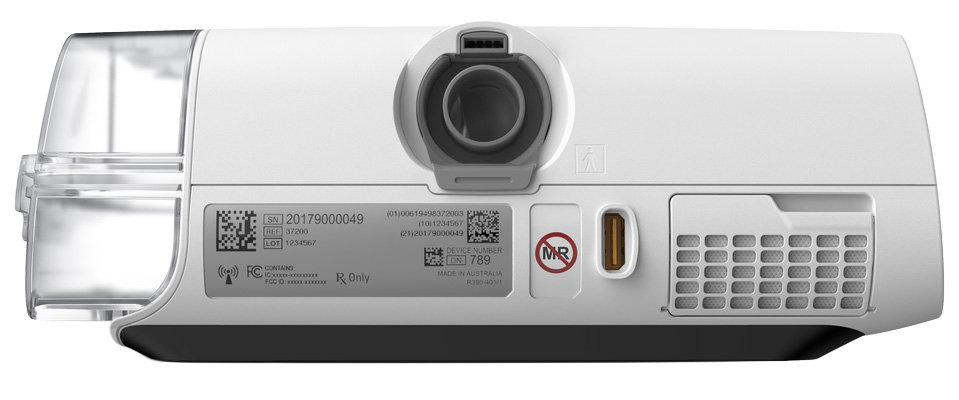
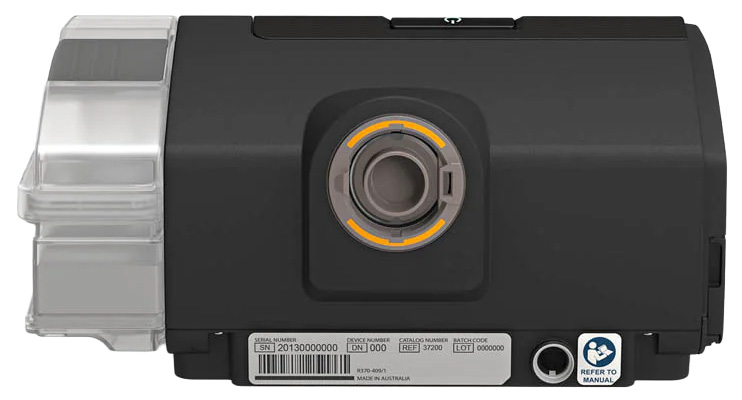
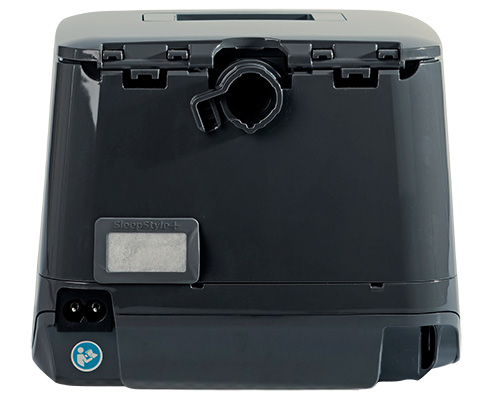
The three machines above all use 22mm air outlets — but look closely at how the surrounding power contacts differ. A ResMed ClimateLineAir 10 will not fit a ResMed AirSense 11. An AirSense 11 heated tube will not fit a Fisher & Paykel SleepStyle+. The heated tubing connector is unique to the machine.
If you need heated tubing, it is imperative that you buy the heated tube made specifically for your machine. The packaging will list compatible models — check it against your CPAP make, model, and generation.
There is one notable exception: the Lowenstein Prisma HYBERNITE Superday heated tube comes with its own external power supply rather than drawing power from the CPAP machine. Because it doesn't rely on a machine-specific power connector, it can be used with most machines via the standard 22mm air connection. It's supplied as standard with some Lowenstein machines but is a useful option for users on a machine that doesn't natively support heated tubing.
Non-heated tubing is a different story. Without a power connection to worry about, a non-heated 22mm tube relies only on the universal 22mm cuff. Provided your machine has a standard 22mm air outlet (almost all do, except the ResMed AirMini), a non-heated standard tube will fit. The same applies to SlimLine tubing, provided your machine is configured to recognise the 15mm body diameter.
Standard vs SlimLine CPAP Tubing
This is one of the most common questions we get, and it deserves a clear answer.
Standard CPAP tubing has a 22mm body diameter. It is the more robust option and offers less internal resistance to airflow. Most older machines and many current ones use standard tubing as the default. It is also the option used with most Fisher & Paykel and Lowenstein machines.
ResMed SlimLine tubing has a 15mm body diameter. The narrower tube is noticeably lighter than standard tubing, which reduces the amount of weight tugging on your mask when you turn over in bed. SlimLine uses 22mm cuffs at each end, so it physically connects to any mask.
Worth flagging: SlimLine is lighter, but it is not necessarily softer or more flexible. ResMed's SlimLine tubing in particular has a relatively firm wall. The advantage is weight and reduced visual bulk, not pliability. Don't assume "slimmer" means "more flexible" — try the option that suits your sleep posture and mask drag tolerance.
Here is the technical point that matters: if your machine supports SlimLine tubing (most modern ResMed AirSense models do), the machine adjusts its internal pressure algorithm to compensate for the smaller body diameter. The pressure delivered to your mask is the same whether you use standard or SlimLine tubing — the machine just works a little harder to push air through the narrower SlimLine tube.
One thing to be aware of: on older machines that don't have a SlimLine setting, fitting a 15mm tube can result in slightly under-delivered pressure. Use the tube specified for your machine.
Finally, a note on quality: with CPAP tubing, price is a reasonable indicator of quality. Manufacturer-branded tubes (ResMed, Fisher & Paykel, Philips, Lowenstein) are built to tighter tolerances, last longer, and seal more reliably than budget third-party options. The savings on a cheap tube are usually offset by needing to replace it sooner — and a poorly-sealing connector can quietly drop your therapy pressure without you noticing.
Types of CPAP Hoses
Beyond the standard-versus-SlimLine question, hoses are also classified by whether they are heated and which machine they are designed for.
Non-heated tubing — The simplest option. No electrical connections, no settings to configure. Suitable for users without a humidifier, or in warmer climates where rainout is not a concern. Available as standard 22mm or SlimLine 15mm. Largely universal — a 22mm non-heated tube fits any machine with a standard 22mm outlet.
Heated tubing — Has an electrical connector at the machine end and an internal heating element that warms the tube wall, preventing rainout inside the hose. The connector is unique to each machine model — see the section above.
The most common heated tubing options stocked for Australian machines are:
- ResMed ClimateLineAir 10 — Designed for the AirSense 10 range. Integrates with the machine's Climate Control system to maintain a set temperature and humidity.
- ResMed ClimateLineAir 11 — Updated design for the AirSense 11. Same Climate Control integration, redesigned connector to suit the AirSense 11 form factor. Not interchangeable with the ClimateLineAir 10.
- ResMed ClimateLineAir 10 with Oxygen Port — Identical to the standard ClimateLineAir 10 but with an integrated oxygen port at the mask end of the tube, for patients prescribed CPAP plus supplemental oxygen therapy. Specific to the AirSense 10 — the Oxy connector is machine-specific just like any other heated tube.
- Fisher & Paykel ThermoSmart AirSpiral — Heated tubing for the SleepStyle and SleepStyle+. Uses F&P's spiral-wound design.
- Lowenstein Prisma HYBERNITE Slimline — Heated SlimLine option for the PrismaLINE range.
- Lowenstein Prisma HYBERNITE Superday — Heated tube with its own external power supply. Works on most machines via the standard 22mm air connection, regardless of whether the machine has a built-in heated tubing port.
- Philips DreamStation 15mm Heated Tube — Heated SlimLine tubing for the DreamStation series.
If you need oxygen connection on a machine other than the AirSense 10, browse our CPAP oxygen port adapters for inline connector options that work with most standard tubes.
The ResMed AirMini Exception
The ResMed AirMini is the smallest travel CPAP machine on the Australian market, and it is the one exception to nearly everything covered above. It does not use 22mm cuffs, it does not work with standard tubes, and it does not work with most masks.
The AirMini tubing uses a proprietary snap-in connector at both ends. It is shorter, narrower, and engineered specifically for the AirMini's compact design. You cannot connect a standard CPAP hose to an AirMini, and you cannot connect an AirMini tube to any other machine.
The same proprietary design extends to masks. The AirMini works only with masks that have a ResMed AirMini-specific connection — either built into a setup pack or available as a separate AirMini connector:
- AirFit P10 Nasal Pillow Mask Setup Pack for AirMini
- AirFit N30 AirMini Setup Pack
- AirFit N20 or AirTouch N20 mask with N20 AirMini Setup Pack
- AirFit F20, AirFit F30, or AirTouch F20 mask with F20 AirMini Connector
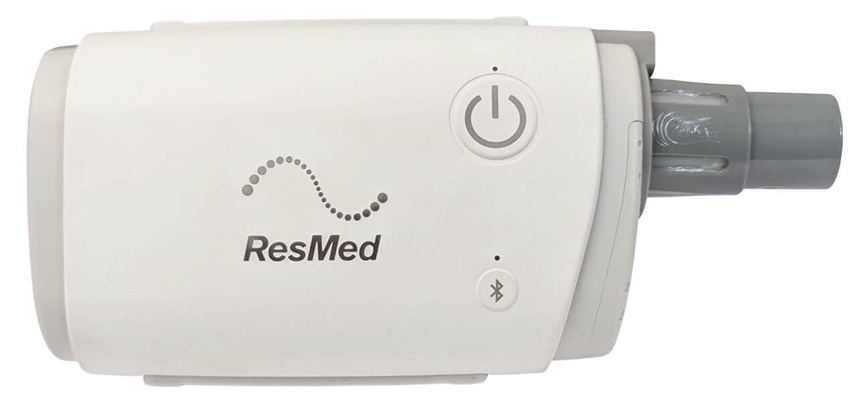
If you want to use a standard mask with your AirMini — say you already have a mask you love and don't want to buy an AirMini-specific version — the ZephAir Universal CPAP Hose Connector is a third-party adapter that lets you connect a standard 22mm hose to the AirMini. Worth knowing: using the ZephAir adapter bypasses ResMed's HumidX waterless humidification system, since HumidX sits inline with the proprietary AirMini tubing. Most travellers find the trade-off acceptable, but if HumidX is important to your therapy, stick with ResMed's AirMini-specific masks and tubing.
CPAP Hose Compatibility by Machine Brand
A quick reference to the right tubing for the most common machines sold in Australia:
- ResMed AirSense 10: ClimateLineAir 10 (heated), ClimateLineAir 10 with Oxygen Port (heated, oxygen therapy), or SlimLine and Standard tubing (non-heated)
- ResMed AirSense 11: ClimateLineAir 11 (heated), or SlimLine and Standard tubing (non-heated). The ClimateLineAir 10 will not fit.
- ResMed AirMini: AirMini tubing only (proprietary)
- Fisher & Paykel SleepStyle / SleepStyle+: ThermoSmart AirSpiral heated tubing, or a standard 22mm non-heated tube
- Philips Respironics DreamStation: DreamStation 15mm Heated Tube, or a standard 22mm non-heated tube
- Lowenstein PrismaLINE: Prisma HYBERNITE heated tube (standard or slimline variants), or Prisma Standard Breathing Tube for non-heated
The general rule: use the heated tubing designed specifically for your machine; any reasonable 22mm non-heated tube will fit if you don't need heating.
How to Choose the Right CPAP Hose
If you're replacing a hose, the decision usually comes down to a few quick questions:
- Match your machine. Identify your CPAP make and model. Heated tubing options are machine-specific — the wrong heated tube simply won't connect.
- Heated or non-heated? If you use a humidifier and have ever experienced rainout, you need heated tubing. If you don't use a humidifier, or live in a warm climate year-round, non-heated is fine.
- Standard or SlimLine? If your machine supports SlimLine (most modern ResMed AirSense machines do), and you want a lighter setup, choose SlimLine. Otherwise standard tubing.
- Length. Most CPAP hoses are 1.8–2 metres, which suits most bed setups. Longer hoses are available but can slightly reduce pressure delivery and increase condensation risk.
Australian Climate Considerations
Australia's climate range is wide enough that local conditions genuinely affect which hose works best:
- Tropical and subtropical regions (Northern Queensland, Northern Territory, far-north WA, parts of northern NSW) — Warm, humid year-round. Many users in these regions don't run a humidifier at all, and when they do, the smaller temperature differential between humidified air and bedroom air means rainout is rare. Heated tubing is typically not needed, and a standard non-heated tube does the job well.
- Temperate and southern regions (Victoria, Tasmania, ACT, southern NSW, southern SA) — Cold winters and dry air make humidification more common, and the bigger temperature drop between warm humidified air and a cool bedroom is what creates rainout. Heated tubing is much more commonly used in these regions, particularly through the winter months.
- Variable climates (Brisbane, Perth, Adelaide) — Many users only feel the need for heated tubing in winter. If you fall into this group, a standard tubing wrap or SlimLine tubing wrap can reduce rainout during cooler months without committing to a heated tube year-round.
Tubing Wraps — A Lower-Cost Alternative
If you don't have heated tubing but get occasional rainout in cooler months, a tubing wrap is an inexpensive workaround. It's a soft fabric sleeve that slides over the hose and insulates it, reducing the rate at which heat escapes from the tube. Wraps are sized for either standard or SlimLine tubing. They won't match the performance of true heated tubing, but they're often enough to manage mild seasonal condensation issues.
Hose Lift Holders for Mask Drag
If your mask gets pulled or twisted when you move during sleep, the cause is often not the mask itself — it's the weight of the hose dragging on it. A hose lift holder elevates the hose above your head, supporting its weight so it doesn't tug on the mask elbow as you turn over in bed. Many users find this single change makes a bigger comfort difference than switching masks. Options include the BiR Premium CPAP Hose Lift for a sturdier free-standing setup, and the more compact CPAP Hose Lift Holder as a simpler clip-on alternative.
Cleaning and Maintenance
Hoses don't need a daily clean, but weekly maintenance keeps them performing well. Disconnect the hose from both the machine and the mask, then wash with warm water and a small amount of mild detergent. A dedicated CPAP tube cleaning brush makes it easier to reach the full length of the tube interior.
Rinse thoroughly with fresh water and hang the hose to air-dry fully before reconnecting it. Tube drying hangers and dedicated drying racks help the hose drain and dry evenly. Never use harsh chemicals, alcohol, bleach, or ozone — these can degrade the tube material and create health risks. For a full walk-through covering every part of your CPAP setup, see our complete CPAP cleaning and care guide.
When to Replace Your CPAP Hose
ResMed's Australian replenishment guide recommends replacing your CPAP tubing every 12 months as part of routine equipment maintenance. Replace your hose sooner if you notice any of the following:
- Visible cracks, splits, or holes
- The tube has become stiff or lost flexibility
- Discolouration that doesn't wash out
- A persistent musty smell even after cleaning
- Connector cuffs that no longer seal tightly to the machine or mask
- Whistling or audible air leaks during therapy
A failing hose causes therapy pressure to drop without you noticing — and pressure that drops below your prescription means your sleep apnea events are no longer being treated effectively. If you've started feeling tired again or your AHI numbers have crept up, your hose is worth checking before you assume it's the machine.
Frequently Asked Questions
Are all CPAP hoses the same size?
The cuffs at each end of nearly every hose are 22mm in diameter — the industry standard. The body of the tube can be either 22mm (standard) or 15mm (SlimLine). The ResMed AirMini is the one exception — it uses a proprietary connector that is not 22mm.
Can I use any CPAP hose with any machine?
For non-heated 22mm tubing, generally yes — the cuffs fit nearly all machines and masks. Heated tubing is different: each machine has a unique heated tubing power connector, so heated tubes are not interchangeable between machines. Always check that the heated tube is designed for your specific CPAP machine.
What is rainout and how do I prevent it?
Rainout is condensation that forms inside the CPAP tube when warm humidified air cools as it travels to the mask. You'll notice it as gurgling sounds, dampness in the mask, or water collecting in the hose. The fix is to reduce the temperature drop along the tube — either by using heated tubing, fitting a tubing wrap for insulation, lowering the humidifier setting, or warming the bedroom.
Do I need heated CPAP tubing in Australia?
It depends on where you live and whether you use a humidifier. Users in warmer northern regions often don't need heated tubing at all. In cooler southern regions, particularly during winter, heated tubing significantly improves comfort. A tubing wrap is a useful middle option for milder climates or seasonal use.
SlimLine vs standard tubing — which is better?
Neither is objectively better. SlimLine is lighter, which reduces mask drag when you move during sleep. Standard tubing is more robust and works on any machine, regardless of age or brand. SlimLine is not necessarily more flexible — ResMed's SlimLine tubing in particular has a relatively firm wall — so don't choose it expecting softness. Choose based on weight, machine compatibility, and personal preference.
Is the pressure the same through SlimLine and standard tubing?
Yes — provided your machine supports SlimLine and is configured to recognise it. The machine's internal pressure compensation algorithm adjusts to deliver your prescribed pressure at the mask, regardless of tube body diameter. On older machines without a SlimLine setting, fitting a 15mm tube can cause slightly under-delivered pressure.
How often should I replace my CPAP hose?
ResMed's Australian replenishment guide recommends every 12 months. Replace sooner if you notice cracks, stiffness, discolouration, a musty smell, or loose connections. With CPAP tubing, paying a little more for a manufacturer-branded tube generally pays off in longer life and tighter sealing.
Can I use a standard hose with my ResMed AirMini?
Not directly — the AirMini uses a proprietary connector. A third-party adapter such as the ZephAir Universal CPAP Hose Connector lets you connect a standard 22mm hose, but doing so bypasses ResMed's HumidX waterless humidification.
Choose the Right Hose for Your CPAP
Your hose is one of the simplest parts of your CPAP setup, but a worn or wrong hose can quietly undermine your therapy. Match the hose to your machine — especially for heated tubing — replace it once a year (or sooner if it shows wear), and clean it weekly. Done well, your hose will do its job without you having to think about it.
Browse our full range of CPAP tubing, setup kits, and heated tubes at CPAP Tubes & Setup Kits. If you're not sure which hose suits your machine, our team can help — feel free to get in touch.