Kingon Oxygen Concentrators
Kingon makes the P2 range of portable and transportable oxygen concentrators — four models, from a 1.98kg unit you wear over one shoulder to a dual-mode machine rated to run 24 hours a day. All four are included in the Australian Register of Therapeutic Goods, and we stock the filters, batteries and power packs that go with them.
Not sure whether your prescription calls for pulse dose or continuous flow? That decision comes before the choice of model, and it is the first thing the comparison below the range settles. For the manufacturer's full specifications, download the Kingon P2 range catalogue (PDF).

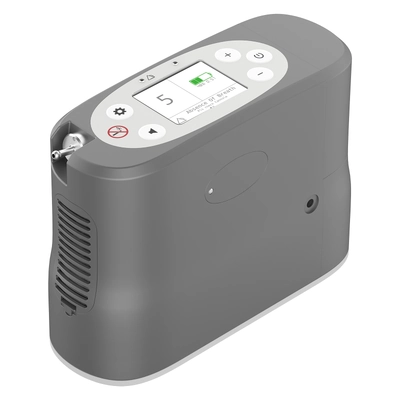
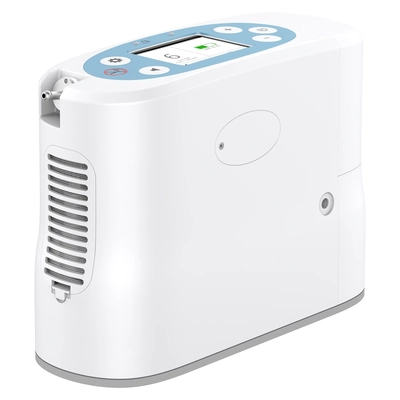
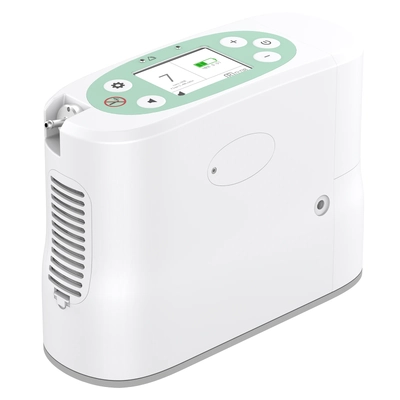
The Kingon P2 Range Compared
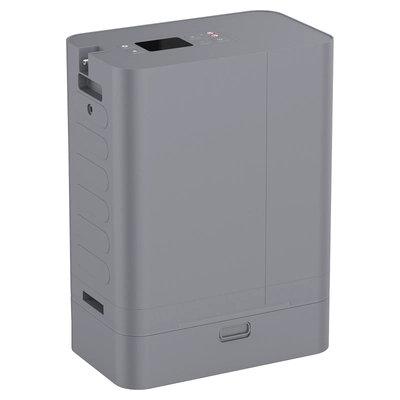
Three of the four share the same 1.98kg chassis and differ only in how much oxygen they can deliver. The fourth is a different kind of machine altogether.
| P2-E | P2-E6 | P2-E7 | P2-TOC | |
|---|---|---|---|---|
| Delivery | Pulse dose | Pulse dose | Pulse dose | Pulse and continuous |
| Maximum output | 1,000 ml/min | 1,200 ml/min | 1,400 ml/min | 2,000 ml/min pulse, 3 LPM continuous |
| Flow settings | 1–5 | 1–6 | 1–7 | 10 pulse, 5 continuous |
| Battery, lowest setting | 5h | 5h 24min | 7h | 6h 36min |
| Battery, highest setting | 1h 42min | 1h 42min | 1h 42min | 1h 48min |
| Weight | 1.98 kg | 1.98 kg | 1.98 kg | 8.0 kg, on a cart |
| Suitable for overnight use | No | No | No | Yes, if prescribed |
Three things worth reading off that table. All three portables run for roughly 1 hour 42 minutes per battery at their top setting — a higher model buys you a higher ceiling, not a longer day at that ceiling. The P2-E7 holds its advantage at the low and middle settings most prescriptions actually sit in. And the P2-TOC is the only model that delivers continuous flow, which is what an overnight prescription normally calls for — no pulse dose device is suitable for that, at any output.
If your prescription sits comfortably inside five settings and you want the lightest option, the P2-E is the sensible choice and the more expensive models are more than you need. The P2-E6 sits in between, for someone who needs a little headroom above five.
The table above gives the longest and shortest runtimes only. Kingon's own P2 range catalogue (PDF) lists the duration at every setting for all four models, which is the figure to check if you already know your prescribed setting.
Which Filters and Power Packs Fit Which Model
This catches people out, so it is worth being explicit. The consumables are not interchangeable across the range.
| Your machine | Intake filter | Spare power pack |
|---|---|---|
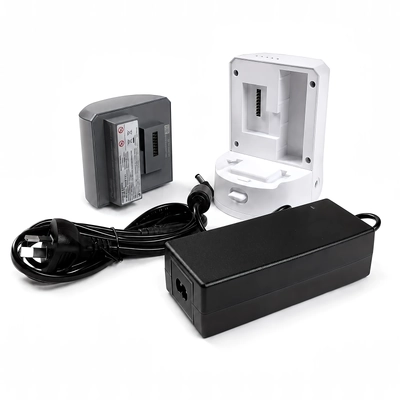
| P2-E | Intake filter felt for P2-E / E6 / E7 | Power pack for P2-E (grey) |
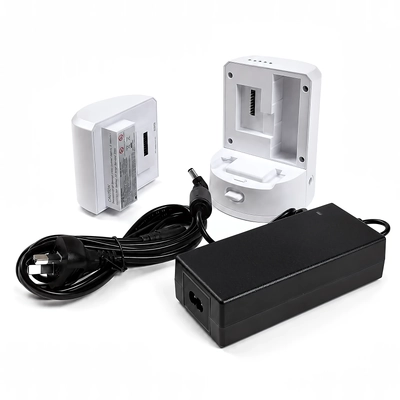
| P2-E6 | Intake filter felt for P2-E / E6 / E7 | Power pack for P2-E6 & P2-E7 (white) |
| P2-E7 | Intake filter felt for P2-E / E6 / E7 | Power pack for P2-E6 & P2-E7 (white) |
| P2-TOC | Felt 1 and Felt 2 — two different filters | Uses battery modules, not a power pack |
Two traps in there. The two power packs look almost identical and are not interchangeable — the grey one fits the P2-E, the white one fits the P2-E6 and P2-E7. And the P2-TOC takes two separate intake felts, not one, so a replacement order for that machine needs both. If you are unsure which machine you have, the model number is printed on the label underneath it, or send us a photo and we will tell you.
Filters are the cheapest thing you can do for a concentrator and the most commonly neglected — a blocked intake makes the compressor work harder and shortens the life of the sieve beds. Follow the cleaning and replacement schedule in your manual. The rest of the range is on our oxygen parts and accessories page.
About Kingon
Kingon concentrators are made by Qingdao Kingon Medical Technology in China and supplied here through an Australian distributor. All four P2 models are included in the Australian Register of Therapeutic Goods as Class IIa medical devices — the P2-E, P2-E6 and P2-E7 under ARTG ID 321141, and the P2-TOC under its own entry, ID 519431.
That listing is worth understanding rather than just noting. It means the TGA has assessed the devices for supply in Australia, that there is an Australian sponsor legally responsible for them, and that problems can be reported through the TGA rather than only to an overseas manufacturer. It is the difference between a regulated medical device and a concentrator bought from an overseas marketplace, which is a genuine and growing problem in this category.
Practically, it also means servicing, warranty and spare parts are handled here rather than shipped back overseas. Every Kingon we sell comes with a 3-year warranty, extending to 5 years if you register the device within 14 days of receiving it.
Using Oxygen Safely at Home
Oxygen itself does not burn, but it makes everything around it burn faster and hotter. The precautions are about the room rather than the machine: three metres between the concentrator and any flame, no candles, smoking or vapes, water-based products only on your face and hands, and nothing covering the intake or vents. Separately, ring your electricity retailer and register as a life support customer — it is free and it protects your supply from disconnection.
Our guide to using oxygen safely at home covers all of it, including blackout planning and what to tell emergency services. A printed copy comes in the box with every concentrator we send.
Frequently Asked Questions
Supplemental oxygen is a prescribed therapy. Both the flow setting and the number of hours a day you use it are decided by a doctor, based on tests they run — not something to choose from a product page.
If you have not been assessed, speak with your GP or a respiratory specialist before ordering. If you already have a prescription and are not sure which model meets it, ring us on 1300 992 727 and we will go through it with you.
Not a pulse dose one. The P2-E, P2-E6 and P2-E7 deliver oxygen only when a sensor detects you starting to breathe in, and inside a pressurised CPAP circuit there is no breath signal for that sensor to find. It will not work at any setting.
Adding oxygen to CPAP therapy needs a continuous flow source, which in this range means the P2-TOC. Whether oxygen should be added to your therapy at all, and at what rate, is your prescriber's decision — please speak with them and with us before ordering for this purpose.
The P2 range uses alphanumeric alert codes on the display, and most of them point at something simple — a cannula that has come loose, a blocked intake filter, or the unit running somewhere too warm.
We have written up every code and what to do about it on our Kingon P2 alert codes page. If the code points at the machine rather than the setup, stop using it and ring us.
The devices carry a 3-year warranty, extending to 5 years if you register within 14 days. Two parts wear out sooner and are treated separately: the batteries, rated for around 500 charge cycles — roughly 16 to 18 months of nightly use — and the sieve beds, which are the part that actually separates oxygen from room air.
Both carry 12 months' warranty and both are replaceable rather than being a reason to replace the machine. Keeping the intake filters clean is the single biggest thing you can do to extend sieve bed life.
Not sure which model suits your prescription? Ring us on 1300 992 727 or send us a message — we would far rather talk it through before you order than sort out a return afterwards.